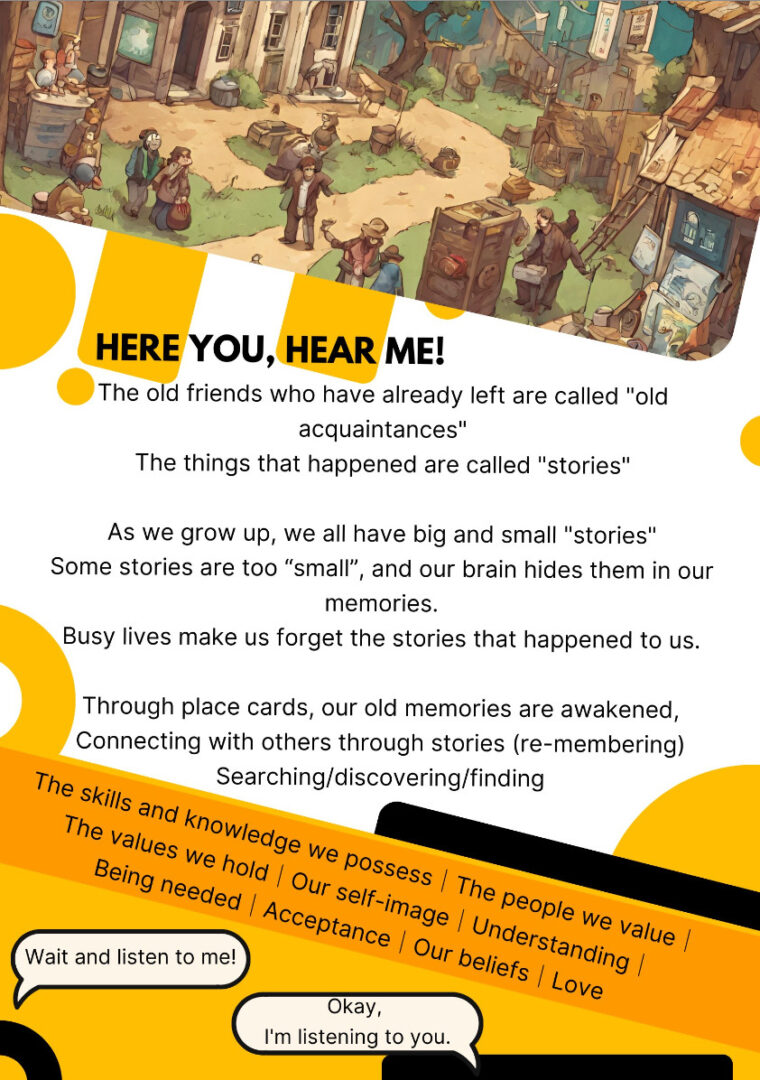
 This video highlights the crucial role of community participation in supporting traumatised children and young people. Our project focuses on co-creation and community healing, beginning with the collaborative design of a card game developed in partnership with traumatised children and young people along with other community members. This initiative encompassed broader themes of healing and support, anchored in the belief that collective efforts can drive meaningful change. The four foundational elements of our initiative are sharing, community healing, documentation and co-creation. Through the engaging card game and shared storytelling, we aimed to create an inclusive and safe space for expression and healing. This environment encouraged open dialogue and fostered trust, allowing participants to share their experiences without fear of judgement. This project emphasises the importance of community involvement, where caregivers, professionals and community members unite to nurture resilience and growth among traumatised children and young people. By leveraging our collective strengths and resources, we can work together to support these young individuals, helping them heal and thrive in a compassionate setting. By documenting our journey and insights, we seek to amplify the voices of the young people and provide valuable resources for others working in similar contexts. This project serves as a powerful reminder that healing is a communal journey, where co-creation and community participation are essential in empowering and uplifting every child. Together, we can build a brighter future for these young individuals, rooted in collaboration and shared commitment.
Key words: Community healing; co-creation; card game; trauma; children; documentation; narrative practice; narrative therapy
Wong, S. M., & Kwong, K. F. (2026). It takes a village to raise a child: Community healing for traumatised children and young people with the “Here You, Hear Me” card game [Video]. International Journal of Narrative Therapy and Community Work, (1). https://doi.org/10.4320/ZWTV5709
