By Valeria Kvasnevska

Valeria Kvasnevska is a writer, founder of the writing school Writy, and a creative head working with brand ideas, narratives and meaning in advertising. Originally from Kherson, Ukraine, she now lives in Portugal. For the past eight years, she has been working with people through writing, personal stories and reflective practices. She is currently studying narrative therapy at Dulwich Centre and facilitates writing workshops and retreats across Europe.
Valeria Kvasnevska draws on Michael White’s ideas of “saying hullo again” to re-member her home in the Ukraine and the way of being it held.
Key words: grief, bereavement, re-membering, Team of Life, place, Ukraine, narrative therapy, narrative practice
Kvasnevska, V. (2026). Exploring grief and re-membering place [Photo essay]. International Journal of Narrative Therapy and Community Work, (2), https://doi.org/10.4320/EGZB3731
Exploring grief and re-membering place
When I first engaged with writing about narrative therapy and grief (Hedtke, 2014; White, 1998; Wingard, 2001), I felt a strange disconnect. I could easily find deep compassion for the stories of others: for their losses, their struggles and their longing. Yet, I struggled to extend that same empathy towards myself. I had internalised a rigid definition of loss: I told myself that since no-one in my life had died, I hadn’t suffered a “real” loss.
Living a relatively “normal” life now, away from the immediate danger of shelling (as a lot of Ukrainians are now), I felt like I didn’t qualify for grief. I dismissed my own experience. Yes, my childhood hometown was destroyed. My city, Kherson, was occupied and later ruined. There is nowhere for me to return in the country where I grew up and raised my children. But because there were no funerals, I told myself I had no right to complain.
However, ideas about “re-membering” (Russell & Carey, 2002; Myerhoff, 1982) and Michael White’s (1998) concept of “saying hullo again” challenged this silence. White suggested that healing doesn’t necessarily mean letting go or seeking closure; instead, it can mean re-incorporating the lost relationship into one’s life in a new way. I realised that in relation to my home, I had done the exact opposite: I had said goodbye too effectively. I had silenced the memory to keep functioning. But in doing so, I had disconnected from a significant part of my identity.
To test these ideas, I decided to treat my lost home not as a piece of real estate, but as a lost relationship. I began to ask myself: What did this place mean to me? What version of “me” did it allow to exist?
When I looked for an answer, it appeared as a physical sensation – a tightness in my chest that I had been carrying for a long time.
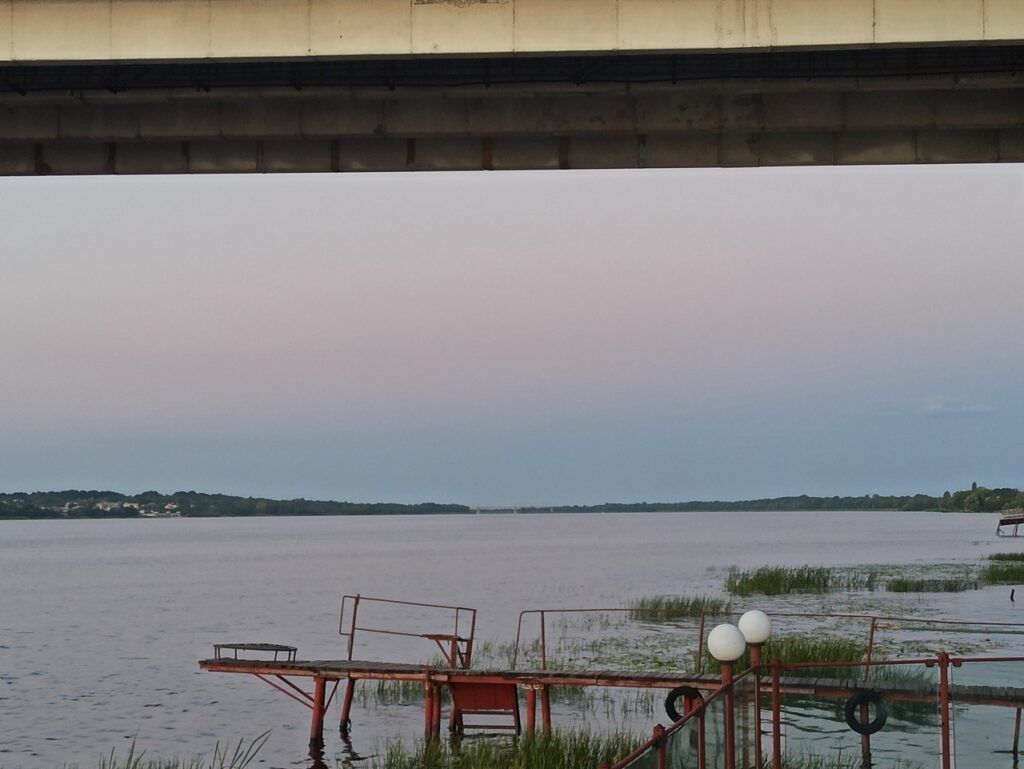
I remembered fishing all day and feeding the smallest fish to my cat, Marfa. I thought of my father’s old windsurfing board. It was tied to the pier, and even though I had no idea how to use it, it drifted gently on the smooth water, inviting me to settle in with a pack of market croutons – which flavour was it, crab or sausage? It didn’t matter – I would lie on that board for hours, splashing in the water, watching the fishers on the Antonivskyi Bridge or the passersby walking to the bus stop, looking down at me. They probably thought I was a lazy, spoiled child with nothing better to do. And I absolutely was.
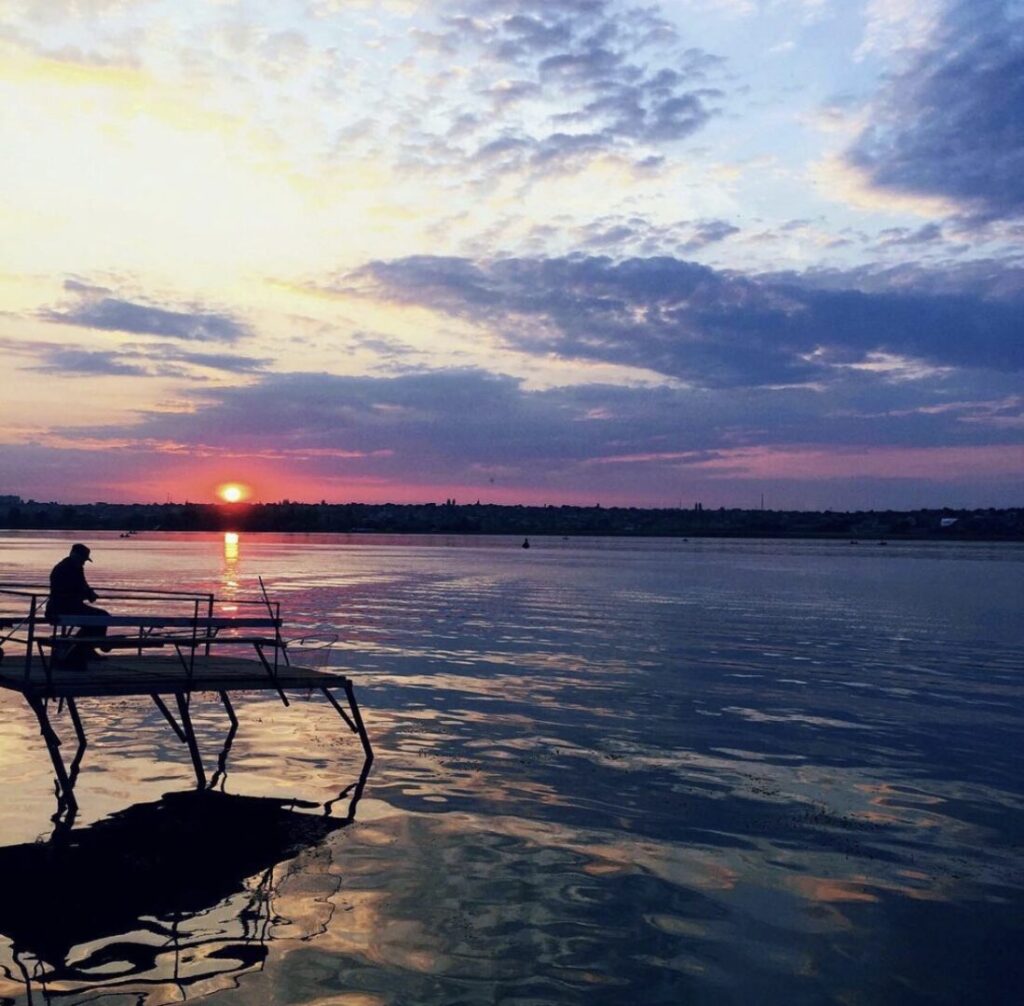
Reflecting on these moments, I realised that this place was on my side. Unlike other places I have lived, which required leases, negotiations and justifications, this home demanded nothing. I didn’t have to perform or prove my worth there. I could be a child. I could eat cookies for lunch and drink cold milk without judgement. That house held a version of me that felt entirely real and unconstructed. What I lost, I now realise, was not just the physical structure, but the access to that specific way of being.
This realisation led me to the “Team of Life” concept (Denborough, 2008). This perspective views identity not as a solo project, but as something shaped by a network of significant relationships with people, places and even activities. Within this framework, my home wasn’t just a background; it was an active member of my “team”. It played the role of a protector, holding space for my most authentic self.
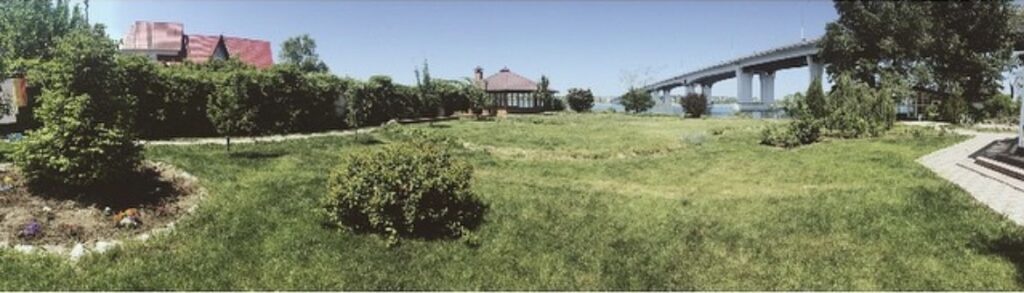
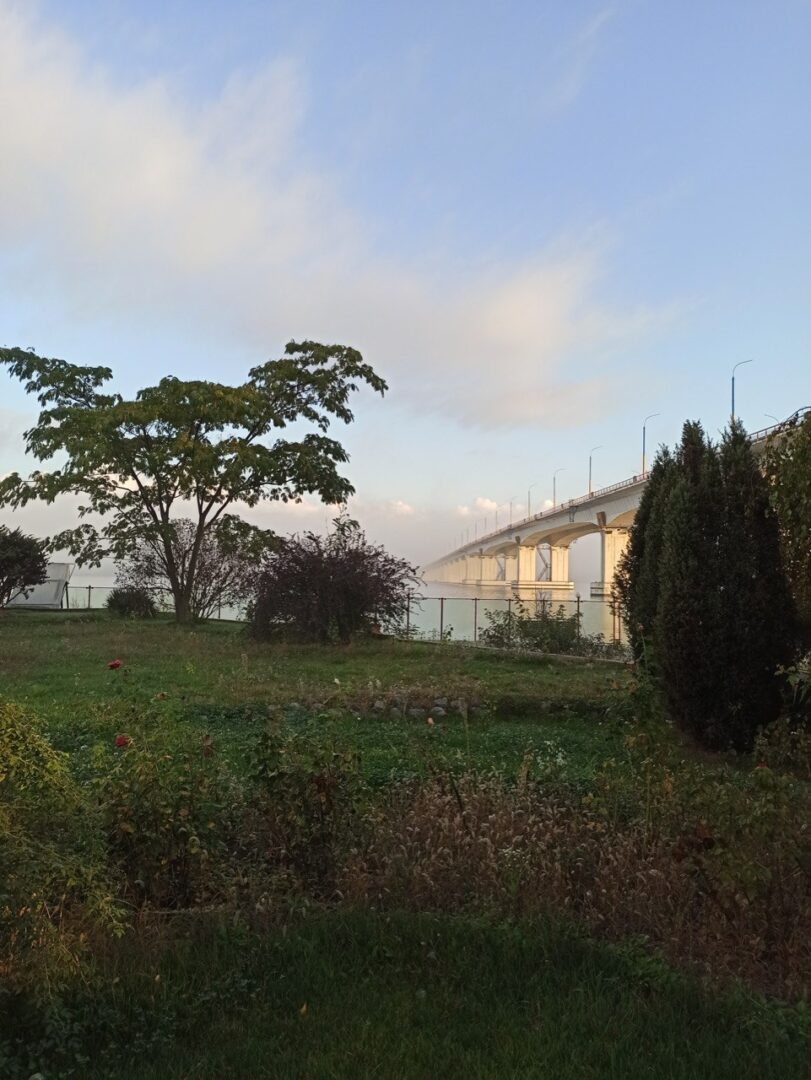
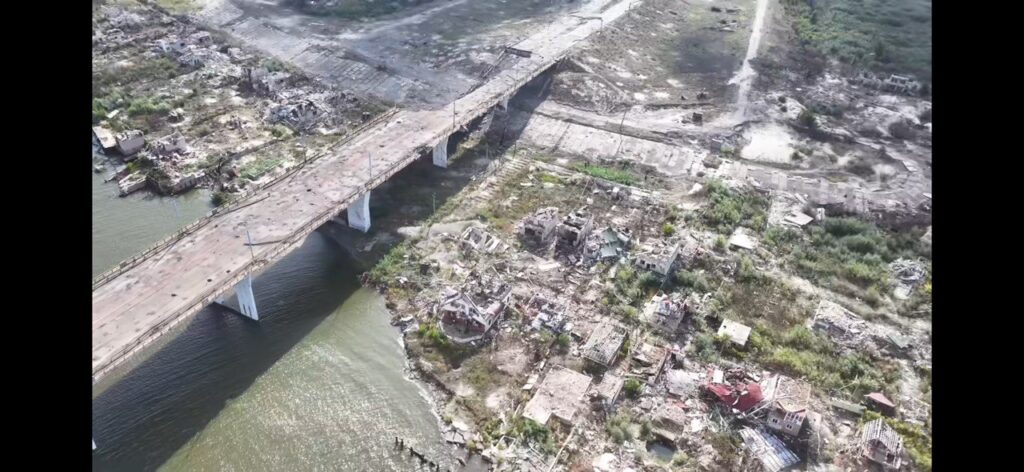
The physical reality of the loss is cruel. The bridge is destroyed, the river is mined, and the dam explosion flooded and finished off what remained. Everything — the small sauna where we’d invite everyone in winter and loudly count down together – “THREE, TWO, ONE, GOOO!” – before jumping into the freezing water, the apricot trees, the agave, the little Christmas tree we jokingly stole from Crimea in a plastic cup, my father’s windsurfing board – everything is gone.
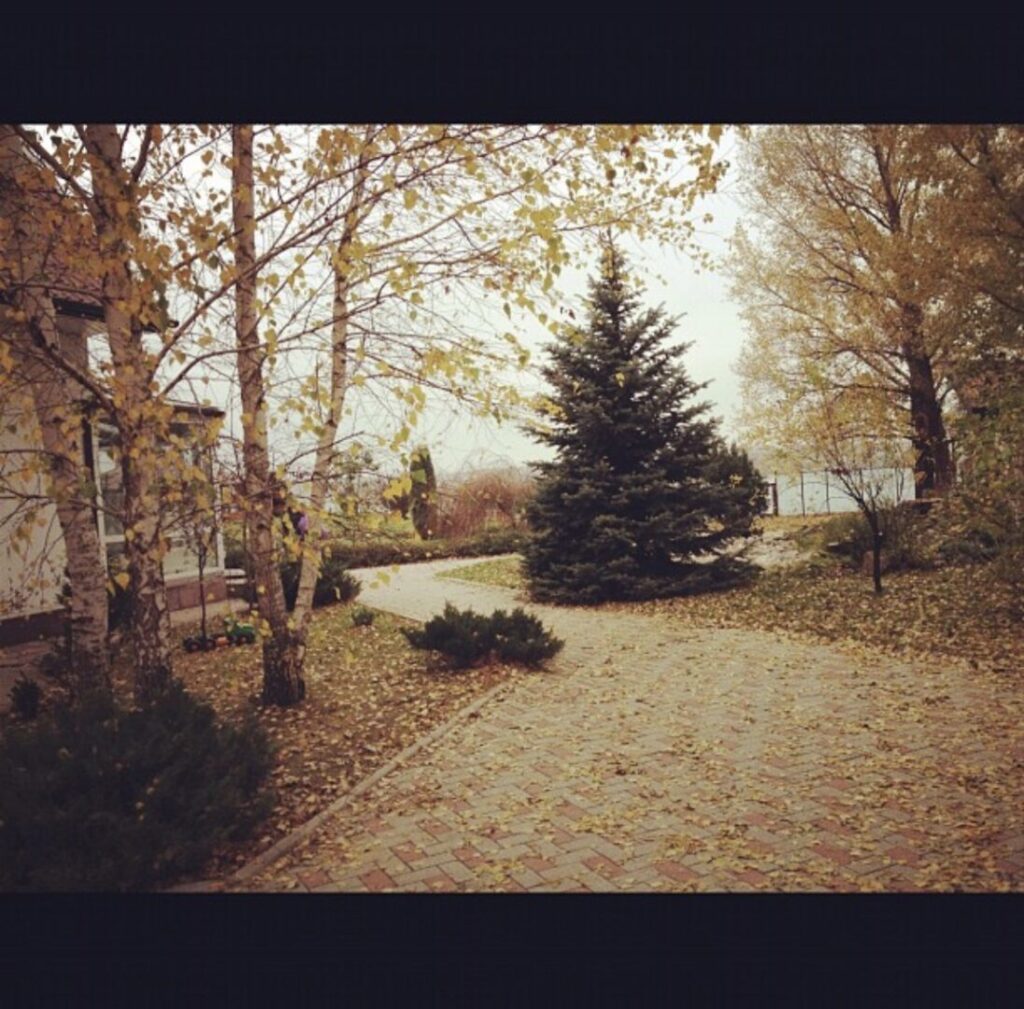
For months, I searched for photos of my childhood home through Telegram channels that document the destruction of the war. It felt like looking for a missing person. When I finally saw a photo of it, roofless, windowless, doorless and stripped of its trees, I felt a strange sense of relief. At least the uncertainty was over. I knew where it was and what had happened to it.
In that moment of recognition, just as Michael White suggested, I found myself saying “hullo” to my home: “Hey bud … I’m in a different country now. Look how the kids have grown! And my six-month-old, Emma, remember? I’ve already bought her books about puberty, can you imagine? Oh, and this? This is a tattoo I got in Madrid when I was out with my girlfriends. What do you think?”
It wasn’t a dramatic dialogue, but an acknowledgment that our relationship hadn’t ended; it had simply changed form. This shifted my understanding of grief from a process of alienation and detachment to something else – an open negotiation with what was, and still is, a part of me.
Physically, it is gone. But I began to notice where its presence still lingers.
My love for surfing nowadays is deeply connected to that pier by the river. The feeling of being on the water, the rhythm, the lack of a need to perform, and the deep silence I used to find at home, it’s all there. And quite frankly, that’s probably the reason I drag my kids surfing with me too. I want them to know that feeling: that there can be a place completely on your side. What I thought was just a hobby turned out to be a way to keep alive my connection to that spoiled, lazy, happy child on a board.
I also see this connection in my family. Though we are scattered across different countries, my parents and relatives still hold the invisible walls of that home. Through our shared memories, the jokes, the gardens we build in new places (even temporary ones), the essence of that place survives.
Most importantly, I see it in my children. We move from one rented house to another, and they lack the fixed “ancestral” home I had. But I’ve started to see them as my new points of stability. They are not a replacement for what was lost, but they are the continuation of that safety and belonging.
Now, living in a house in Portugal, with three dogs and a little vegetable garden with lemon trees, I look at our life and ask: What would my childhood home say about all of this? What would you say about the man we live here with? Would you approve of the yellow kitchen we painted together? And what about the fact that we still haven’t set up the chicken coop – is it finally time, or is it just the influence of David Beckham’s Instagram stories on us? Though, the kids do love scrambled eggs. Well, just like I did … remember?
And would you, my childhood home, be happy that for Christmas or birthdays, people gather here from all over the world? They dress up in ridiculous costumes, dragging things from different corners of the Earth just to bring that feeling of home. What would you say about these girls? I love them. And these two, she is from Luhansk, also far from her roots, and he is from Kyiv, constantly struggling to find the same bars and coffee shops here, clearly homesick but trying not to show it. But we are all managing here somehow, you know? Bit by bit.
I think, yes, you would love them all. You always loved it when the house was full of people.
This journey through writings about narrative practice and grief has changed my perspective on my own story. Grief is not a competition over who has suffered more, and it is not a linear path towards “moving on”. You can say “hullo” to what you have lost. You can carry it with you as a part of yourself that stays inside forever. Because the more you try to say a final, forceful goodbye to it, the wider the darkness becomes, a void that nothing can fill, and any attempt to shove in something new will fall. Because the new will never replace that specific part of your identity.
Healing, I’ve learnt, isn’t about leaving the past behind. It’s about choosing which parts of our history we want to carry forward, and recognising that the places we have loved continue to shape who we are, even when we can no longer stand within their walls or riverbanks.
References
Denborough, D. (2008). Collective narrative practice: Responding to individuals, groups, and communities who have experienced trauma. Dulwich Centre Publications.
Hedtke, L. (2014). Creating stories of hope: A narrative approach to illness, death and grief. International Journal of Narrative Therapy and Community Work, (1), 1–10.
Myerhoff, B. (1982). Life history among the elderly: Performance, visibility and re-membering. In J. Ruby (Ed.), A crack in the mirror: Reflective perspectives in anthropology (pp. 231–247). University of Pennsylvania Press.
Russell, S., & Carey, M. (2002). Re-membering: Responding to commonly asked questions. International Journal of Narrative Therapy and Community Work, (3), 23–31.
White, M. (1988). Saying hullo again: The incorporation of the lost relationship in the resolution of grief. Dulwich Centre Newsletter, Spring, 7–11.
Wingard, B. (2001). Finding our own ways to grieve, to remember and to heal. In B. Wingard & J. Lester (Eds.), Telling our stories in ways that make us stronger (pp. 41–44). Dulwich Centre Publications.