Welcome to Dulwich Centre  
   

Print

Michael White Archive


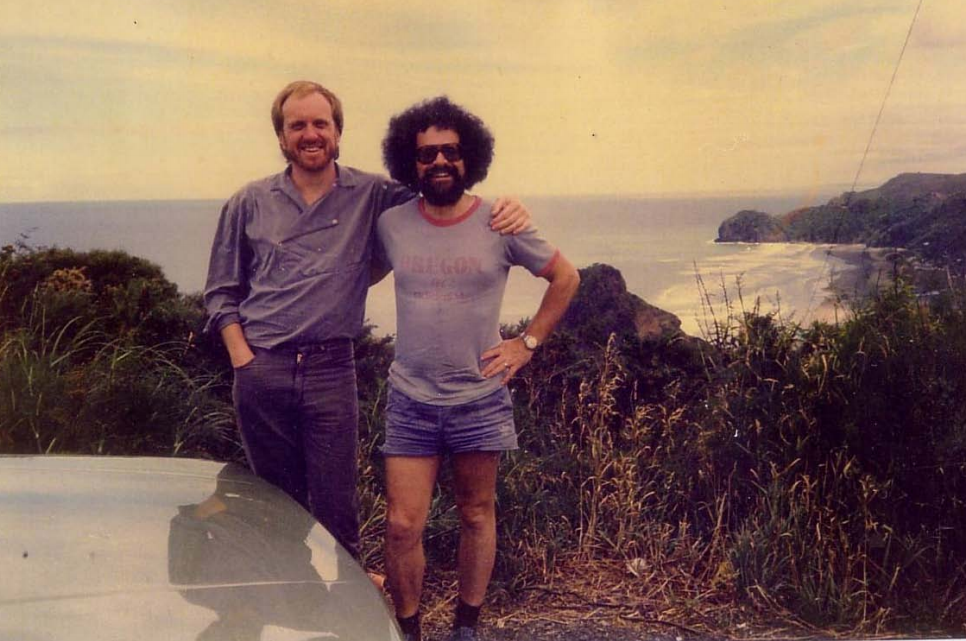
Picture by Natasha Savelieva


Donation from The Bouverie Centre

Dulwich Centre Foundation would like to acknowledge the generous donation from the Bouverie Centre to the Michael White Archive. This donation will assist us to catalogue the video collection of Michael’s therapy and teaching sessions. This will enable us to make this collection more accessible to future practitioners and researchers. Thanks, Bouverie Centre! To read more about The Bouverie Centre, visit http://www.bouverie.org.au/


Michael-White-and-David-EpstonWhere did it all begin?: Reflecting on the collaborative work of Michael White and David Epston

Context magazine's issue 105 (October 2009), edited by Barry Bowen and Márie Stedman, explored the theme 'Narrative influences'. For this special issue, the editors asked Cheryl White to reflect on the significance of the connection between Michael White and David Epston. Cheryl's reponse, 'Where did it all begin?: Reflecting on the collaborative work of Michael White and David Epston', is republished here (pdf, 162 KB).


Reflections on Michael White's legacy

The 30th year anniversary edition of the Australian and New Zealand Journal of Family Therapy contains an article by David Denborough, 'Some reflections on the legacies of Michael White: An Australian perspective' - click on the article name to read about the spirit of originating in Michael's work, broader social issues, the politics of experience, and more.


Many stories, many legacies

It is difficult to believe, but it is now one year since Michael died. It seems much more recent than this to us and we are still trying to come to terms with what it means to us and to the field that Michael is no longer around. As we approach the first anniversary of his death, it seems a particularly significant time to be considering Michael's many legacies. So much so, that Ann Hartman has recently suggested a particular project for the Michael White Archive. Ann suggested that we invite a select number of experienced narrative practitioners from different countries and contexts to write a particular sort of piece for the archive. This was the invitation:


We would like you to briefly describe which of Michael's ideas/practices/principles were most significant to you, why this was so, and how these will have a continuing influence in your work. We are particularly interested in hearing which of Michael's ideas and practices have been most valuable to you and where you have taken these in your own context. We are not simply seeking re-descriptions of Michael's work. Instead, we hope this project can contribute to Michael's legacy, not just report it. If possible, we would like these pieces to be written with a degree of thoughtfulness and rigour and to focus on ideas and practices. Michael certainly worked and re-worked his pieces of writing and we would like this collection to in some way be congruent with this. Thank you for considering this invitation. We are thinking carefully about how to recognise the one year anniversary of Michael's death and it feels very good to be joined with others in this.


Warm regards,
Ann Hartman
& Dulwich Centre


The responses

Michael's intellectual projects David Epston (New Zealand)
Refusing to pathologise Angel Yuen (Canada)
Care-Full listening:
A posture of readiness for discovery
Yishai Shalif (Israel)
What does this mean for the way I teach?
Ann Hartman (USA)
Alternative stories - restoring hope
Caleb Wakhungu (Uganda)
Externalising has a special place
Niels-Henrik Sørensen (Denmark)
Narrative practice in communal settings
Alfonso Diaz-Smith (Mexico)
Revolutionizing practice
Joan Laird (USA)
What are you doing?
Pierre Blanc-Sahnoun (France)
A re-membering story for Michael
Claire Ralfs (Australia)
A decentred position
Angela Tsun On Kee (Hong Kong)
An invitation to embody speech
David Newman (Australia)
Ceremonias de Reconocimiento Solidario / Ceremonies of Solidarity Acknowledgement
Marcela Polanco
(USA/Colombia)
Doing reasonable hope
Kaethe Weingarten (USA)
Unpacking problems
Rudi Kronbichler (Austria)
To use imaginary worlds to make this one better
Daria Kutuzova (Russia)
Double stories
Geir Lundby (Norway)
Finding my own bicycle – thanks to Michael White
Jeannette Samper (Colombia)


Michael's intellectual projects
David Epston (New Zealand)


This was spoken at the memorial for Michael event held at Dulwich Centre 24 November 2008


When Cheryl emailed me seeking my willingness to speak to Michael's intellectual project at the ceremony planned to honour Michael, I think anyone would have found that a daunting undertaking. However, what would you have done then if you were informed that you would be limited by time ... in fact, to four minutes? Well, of course, I strongly protested this. Cheryl kindly relented and added a further minute. So what follows is the five minute version of Michael's intellectual projects. I think you will agree with me that the magnitude of Michael's blending of acumen, ingenuity, and scholarship warrants far more time than I have today. Still, I accepted in good faith the challenge to distil Michael's project down to the time limits I have. So here goes ...


Michael's intellectual project had to do with what Lionel Trilling referred to as the 'sentiments of being' - about the kind of person one seeks to be and about the way they wish others to be - that is about the morality and politics of relationship. Michael found the most eloquent expressions of the 'sentiments of being' in story because it takes the fullest and most precise account of variousness, possibility, complexity, and difficulty.


It would be impossible to entirely separate Michael's intellectual project from his extensive reading and immersion in the thinking of Foucault. Michael, in a manner of speaking, took part in a one-sided conversation with Foucault from the day he met him reading his chapter 'Power and knowledge' up to very recently. Let me read you an abstract from a book chapter by the philosopher Phillip Caputo who curiously speculates about what kind of therapist Foucault might have been, given that he had no explicit therapeutic intentions whatsoever throughout the twists and turns of his philosophical career. But remember that his first degree was in psychology, he had interned in a public psychiatric institution in the 1950s and made medical and psychiatric history and practice the subject matter of the middle stage of his career.


Caputo writes:


Such a therapy (that is if Foucault invented it) does not look at the mad as 'patients' in the sense of objects of medical knowledge but as 'patiens', as ones who suffer greatly, who suffer from their knowledge. Such a 'patiens' would not be an object of knowledge but an author or subject of knowledge, one from whom we have something to learn.


He went on to surmise that for Foucault as a therapist


the healing gesture meant to heal this suffering is not intended to explain it away or fill in the abyss but simply to affirm that they are not alone, that one common madness is a matter of degree, that we are all siblings in the same night of truth. The healing gesture is not to explain madness if that means to explain it away but to recognize it as a common fate, to affirm our community and our solidarity.


Couldn't that equally well be an apt description of Michael's narrative practice? Was this what Michael found so compelling about Foucault, that they too were 'brothers in the same night of truth'?


What I consider Michael's intellectual project concerned itself with more than anything else was what Zygmunt Bauman refers to as 'irresistible individualization'. Let me quote Bauman at length as he addresses so eloquently and succinctly what was always at stake for Michael:


At no time, though, does articulation carry stakes as huge as when it comes to telling the 'whole life' story. What is at stake then is the acquittal (or not, as the case may be) of the awesome responsibility placed on one's shoulders - and on one's private shoulders alone - by irresistible 'individualization'. In our 'society of individuals' all the messes into which one can get are assumed to be self-made and all the hot water into which one can fall is proclaimed to have been boiled by the hapless failures who have fallen into it. For the good and the bad that fill one's life, a person has only himself or herself to blame ...The distinctive feature of stories told in our times is that they articulate lives in a way that excludes or suppresses ... the possibility of tracking down the links connecting individual fate to the ways and means by which society operates.


Michael countered this with a kind of 'postpsychological' imagination, one in which private troubles are to be contextualized in public/cultural matters. Michael's project will always live on in narrative therapy for the reason that it has always been so integral to it.


The last month before he died, Michael and I were discussing a paper I had read by the anthropologist, Nancy Scheper-Hughes. On hearing about it, he immediately insisted I email him a PDF of it. It has assumed far greater significance for me now that it will be the last book, book chapter, article, etc that I will ever be able to forward to him, always wondering how he would so ingeniously re-work it to illuminate his concerns, both those of the moment and those that endured throughout the 28 years I knew him. In reading Scheper-Hughes to you, I am taking the liberty of changing her term of anthropologist to our term of therapist:


The therapist [formerly anthropologist] can view her subjects as unspeakably other, belonging to another time, another world altogether. If it is to be in the nature of an ethical project, the work of therapy [anthropology] requires a different set of relationships. In minimalist terms, this might be described as the difference between the therapist [anthropologist] as 'spectator' and the the therapist [anthropologist] as 'witness'.


If observation links the therapist [anthropologist] to the natural sciences, 'witnessing' links therapy [anthropology] to moral philosophy. Observation, the therapist [anthropologist] as 'fearless spectator', is a passive act which positions the therapist [anthropologist] above and outside human events as a 'neutral' and 'objective' ([e. uncommitted] seeing I/eye. Witnessing, the therapist [anthropologist] as companheira, is the active voice, and it positions the therapist [anthropologist] inside human events as a responsive, reflexive, and morally committed being, one who will 'take sides' and make judgements, though this flies in the face of therapeutic [anthropological] non-engagement with either ethics or politics. Of course, non-involvement was, in itself, an 'ethical' and moral position.


In many ways, it serves as an epitaph for his intellectual project: Michael truly was a 'companeirho' or comrade to all those who knew him - the individuals, couples, families, and communities he worked with as well as his students, colleagues, friends, and interlocutors. Or equally well a quote from George Bernard Shaw:


I am of the opinion that my life belongs to the whole community and as long as I live, it is my privilege to do what I can do. I want to be thoroughly used up when I die, for the harder I work, the more I live. I rejoice in life for its own sake. Life is a brief candle to me. It is a sort of splendid torch which I have got hold of for the moment and I want to make it burn as brightly as possible before handing it on to future generations.


However much we regret it, his intellectual project now becomes ours. I think Michael would say it is in good hands.


Refusing to pathologise
By Angel Yuen (Canada)


I remember fondly my very first visit to Adelaide in 2004 for the 2nd International Summer School of Narrative Practice. It was sunny and the weather balmy as we gathered under a tent in the car park of the Dulwich Centre listening to the opening keynote presented by Michael White which was entitled ‘Turning points in therapy’. Partway through his keynote, Michael began to share a story about a boy referred to him who had been diagnosed with Oppositional Defiance Disorder. He then proceeded to list some of the traits of ODD. After reading through a few of the categories he paused looking up from his notes at the podium to ask the audience … ‘How many of you here would be eligible for this diagnosis?’ Many softly chuckled, and gradually quite a number of hands were raised. More seriously, he went further to say, ‘You can imagine that a boy given this disorder might not be entirely enthusiastic to meet with me about it’.


Shortly after Michael died last year, I found myself back in time sitting under the tent at the Dulwich Centre in the warm summer heat and remembering his story of a boy labelled with ODD. The memory returned while sitting in a school conference meeting where a woman was waiting to hear the results of her son’s academic and psychological testing. The results were delivered … ’Your son has ODD. which stands for Oppositional Defiance Disorder’. The traits of ODD were then listed to her and linked to her son’s ongoing open defiance with authority, acts of refusal to abide by school rules, and his continual opposition in class. Surrounded by a number of school professionals at the conference table, the mother had no words to respond to the question, ‘Do you have any questions?’ In what then felt like a full minute of silence (but was probably a mere few seconds), I was aware of my tense breathing and heart sinking. Yet somehow a calm and poised voice managed to come out to ask the mother some questions about her own knowledge (and expertise) of her child: ‘Do you see this at home?’ ‘What is it like for you to hear this diagnosis?’ ‘Does it fit with your experience of your son or are there times when you do not see opposition?’ From this line of enquiry, the conversation shifted to opening space to learning about the alternative knowledges (and stories) that stood outside what ODD had to say about her son.


Fourteen years ago, in a significant interview regarding ‘psychotic experience and discourse’, Michael commented on the theory of pathology:


The word makes me wince! When I hear it, I think about the spectacular success of clinical medicine in the objectification of persons and of their bodies, and the extent to which the pathologising of persons is the most common and taken-for-granted practice in the mental health/welfare disciplines, and the central and most major achievement of the psychologies. (White, 1995, p. 112)


In the beginning years of my narrative journey, I found these thoughts immensely helpful. To this day, I continue to value and considerably appreciate Michael’s adamant questioning and challenging of the ubiquitous pathologising practices and deficit descriptions that have the ability to rob people of hope and to leave many feeling ‘less-than’. More invaluable, though, was his enormous and inspirational influence of developing a number of respectful, collaborative, innovative, and effective practices. Over several years, Michael guided us with detailed, thoughtful, and delicate skill and hope in the re-authoring of lives and identities where people’s voices could be enlivened about the preferred knowledge and stories of their own lives.


Today, as the sea of pathology remains unending and now with even more sophisticated tools to categorise and interpret people’s lives, it is Michael’s words and images such as the gathering under the tent that sustain me. I’m not quite certain of the meaning of each person’s soft chuckling in response to Michael’s question at the summer school. But for me, the moment somehow seemed emblematic of a collective resistance and ‘opposition’ to the pathologising of people’s lives. Since then, it has also left me thinking that if so many practitioners in one room could be eligible for an ODD diagnosis and disorder, that perhaps we were also joined together in implicitly challenging just what a ‘disorder’ is.


Michael often talked about linking lives through shared purposes. In the poignant anniversary of his death, many of us hold dear the gift of the spirit of his work and ideas that continue to link our lives through a shared commitment: of knowing that in the face of the ever-present mountain of disorders, there will always be sparkling stories of hopes, creativity, skills, passions, values, dreams … and so much more!


Reference

White, M. (1995). Psychotic experience and discourse. In M. White, Re-authoring lives: Interviews and essays (pp. 112–154). Adelaide: Dulwich Centre Publications.


Care-Full listening: A posture of readiness for discovery
Yishai Shalif (Israel)


When thinking of ideas, practices, and/or principles that were most significant to me in Michael’s work and way of being in the world, and which have significantly influenced me personally and shaped the way I work, one particular experience came to my mind. I have been in its grip ever since.


During Michael's last visit to Israel in 2005 I invited him to the wedding of my nephew. This was a traditional Jewish wedding. Michael accepted this invitation with enthusiasm. I would like to describe the experience we shared, try to name some of the practices I feel Michael was performing, and consider their influence on me and my work.


Witnessing a ceremony

Traditional Jewish marriage ceremonies are led by a Rabbi under the Chupa (a canopy spread on four poles held up by four people) which is situated outdoors under the sky. My nephew’s wedding was held on a stretch of grass outside a hall facing the old city of Jerusalem. Michael watched the proceedings very carefully and asked a few questions about certain particulars in the ceremony. Anyone knowing Michael would have recognised his intense concentration in listening and absorbing every detail of the scene. At the end, he reflected on how meaningful it is that a tradition of more than a thousand years is kept alive in this way.


This echoed for me a time when Michael and I took a walk from the Wailing Wall within the old city of Jerusalem to my home that is an hour away. When we were walking on stone paved alleys through the Muslim quarter market, Michael asked, 'do you want to tell me about the 2000 years of history that we are now walking on?'


Back at the marriage ceremony, Michael described how the thousand year old wedding tradition seemed especially meaningful to him, since Hitler and the Nazis tried to eliminate not only the Jewish people but these practices too. He then went on to say that he thought every human being should take part in watching such a ceremony once in their life.


After the ceremony, we went into the hall were the men and women were dancing in separate circles around the bride and bridegroom. In these circles, there were dancers from very young ages to older people. Michael was focused mostly on the young children.


This too reminded me of our walk together. When we were getting closer to my home we passed a very orthodox neighbourhood. The roads where closed to motor traffic because of the Sabbath and young girls with their hair tied into two braids, wearing black and white dresses were playing in the street. Michael watched them intently and asked me questions about them.


I know that these experiences were meaningful to Michael. The morning after the wedding he told me he had been so moved that he found it hard to fall asleep that night.


Practices of listening

What practices did I notice? Probably, what was most significant to me was the way Michael listened and attended to all the different parts of the wedding ceremony. When he was listening, it was like he was doing it with all his senses: sight, ears, body, and mind. He tried to take in the experience as fully as possible. He paid attention to so many particulars. And his involvement in the scene was expressed by the questions he asked that seemed to flow from and to his careful listening.


What he paid attention too also seemed meaningful. Michael was so conscious of the cultural, historical, and social aspects of the occasion. He was thinking of the history of the ceremony, thinking of the wider context of the Jewish experience, thinking of the meaning of the plots and counter plots. All of this seems so relevant to our work with individuals, families, and communities.


The ways in which Michael particularly focused on children's experiences is perhaps rooted in the time he worked in the children's ward at Hillcrest mental hospital. Michael described in his writing (White, 2000a) how children contributed to many therapeutic adventures that were a source joy in his life and also to the development of a range of therapeutic practices. Children's experiences are many times overlooked and they can be so vulnerable and marginalised by the adult world, but Michael in his careful watching and listening was always able to see children’s subordinated stories, their skills and knowledges of life.


Michael’s descriptions of ‘listening’


While writing this piece, I've thought a lot about narrative practices and listening. Consequently, I went on a search of Michael's writing from the 1980s to today. To my surprise, I found very little writing that was explicitly about listening. The most direct mention of listening is the term and practice of 'double listening' (White, 2000b) or 'doubly listening' (White, 2004) which Michael used to describe his posture in therapeutic conversations (White, 2004, p. 30) My understanding of why Michael rarely used the term ‘listening’ lies in his description of what he 'does' in that 'posture'.


As early as 1988, Michael described the act of deriving an alternative story: '… the derivation of this second description usually requires that the therapist initiate questions that invite family members to attend to unique outcomes …' (White, 1989, p. 37). Notice that he uses the terms 'initiate questions' and 'invite to attend'.


In later writing, Michael referred to similar acts he engaged in to 'assist those people to derive alternative meaning of their experience of abuse … help them step into some other more positive account … then it will become possible to actively engage in the reinterpretation …’ (White, 1995 pp. 83-84). In this piece, Michael uses the terms: 'assist in deriving alternative meaning', 'help them step into a more positive account' and 'actively engage in the reinterpretation'.


In another text, Michael describes how his attention to unique outcomes was 'providing for a point of entry to explorations of other ways of being and thinking in the world, to other knowledges of life and skills of living' (White, 1997, p. 225). Notice the use of the phrase 'providing for a point of entry'.


In his writing about work with trauma, Michael elaborates more than in any other text about doubly listening: 'The first step in accessing these alternative territories of life was through the discovery of what it is that people give value to … (this) opens the door to the further development of alternative stories of people's lives and to explorations of the other territories of people's identity … (White, 2004 p. 56). Here he uses the terms 'discovery' and opening the door'. In the continuation of this text, Michael uses following terms 'find signs', 'establish a context', 'get onto this trace'. These are just some of the verbs Michael uses in his description of doubly listening.


A sentence that summarises all the above is: 'And I try to establish a context so that the multi-layered nature of those responses become richly known, powerfully acknowledged and honoured' (White, 2004, p. 30). The word ‘listening’ could not encapsulate the incredibly rich tapestry of intentions and practices that are performed in this process.


Readiness for discovery


In two quotes, one written twenty years ago, and one ten years later, Michael explains what can happen if we do not provide a context of ‘doubly listening’. In the early text (White, 1989), describing the relationship between the people we work with and the unique outcome, Michael offers a hint as to what we need to do in order to fully 'listen' for the unique outcome: '… unique outcomes go unrecognized unless the recipient is "in some sense ready for the appropriate discovery when it comes" (quote from Bateson)' (ibid.). In my mind, this readiness for discovery is the posture Michael refers to in his later writing. Without this posture, he describes, unique outcomes can 'pass like blips floating across the screen of consciousness before disappearing off the edge into a vacuum' (White, 1997, p. 225).


Watching Michael at a Jewish wedding, walking with him through the streets of Jerusalem, and conducting some mini research into his writing about listening, have alerted me to the particular posture that Michael took that can be described as ‘a readiness for discovery’. This is a posture I seek to adopt and choose to perform in my therapeutic conversations and encounters.


References

White, M. (1989). The process of questioning: A therapy of literary merit? In Selected papers. Adelaide: Dulwich Centre Publications.


White, M. (1995). Naming abuse and breaking from its effects. In Re-authoring lives: Interviews and essays (p. 82-112). Adelaide: Dulwich Centre Publications.


White, M. (1997). Narratives of therapists' lives. Adelaide: Dulwich Centre Publications.


White, M. (2000a). Children, children's culture, and therapy. In Reflections on narrative practice: Essays & interviews (pp. 3-24). Adelaide: Dulwich Centre Publications.


White, M. (2000a). Re-engaging with history: The absent but implicit. In Reflections on narrative practice: Essays & interviews (pp. 35-39). Adelaide: Dulwich Centre Publications.


White, M. (2004). Working with people who are suffering the consequences of multiple trauma: A narrative perspective. International Journal of Narrative Therapy and Community Work, (4), 45-77.


What does this mean for the way I teach?
Ann Hartman


I loved Michael. Knowing him and learning from him changed my life, my practice, and my teaching. Here I would like to focus on teaching, as Michael was particularly interested in and supportive of my efforts in that direction. Not only did the content of my assigned readings, videos, experiential exercises, and other teaching tools radically change to a focus on narrative work, but in the spirit of parallel process, I had to ask myself, ‘What does this revolution mean for the way I teach?’ I could not maintain the ‘expert position’ in the classroom and simultaneously expect my students to abandon it in their work with clients. After many years of teaching, it was hard to walk away from that comfortable place of ‘knowing,’ to reach for the student’s expertise, and to develop a truly collaborative process. I couldn’t not challenge my own power in relation to students and still expect my students to examine the way power inequities played out in their relationships with clients.


I remember my first class in the fall after I had decided to make this shift. I had students introduce themselves and tell us where they were to be placed for their field experience. I encouraged students to share any ideas they might have on how a fellow student might approach their new placements. Some students had been in similar placements or knew the area where a fellow student was going and began to share their knowledge. In the course of the introductions, one young student said she was placed on a paediatric oncology service and was pretty anxious about it. An older student immediately spoke, saying that she had lost a child to cancer some years earlier and, in fact, her experience with social workers during that experience was one of the things that led her to become a social worker. She talked a little about the hours and days she spent at the hospital and the social workers who were so helpful to her, saying she would like to talk more with the other student after class. I used this to speak to the wealth of experience in the class and how important it was to draw on that rich resource in our learning. It was a beginning.


I must say, I was very awkward at first. There were some pretty tough silences and it often made the students uneasy and even angry as they pressed me to ‘give them the answers’. In time, I became more comfortable and they began to trust themselves, participate more actively and often ‘got’ my efforts to share authority and recognised that I was trying to model a position I hoped they would take. Of course, I did contribute to the conversation but, again following Michael, I didn’t present information as if it was ‘the truth’ coming from the oracle; rather I made an effort to locate its source, whether from my own practice, an article or a book I had read, or some other professional or personal experience I had had.


The structural power issue was in some ways more difficult. The fact was that I was in a position of power in relation to my students, I ‘marked’ them, I could flunk them. We were a part of a hierarchical system in which my status afforded me more security and more options. I couldn’t avoid my evaluative role as much as I would have liked to. Finally, I handled this by talking about it with the class, by recognising it. Students told me that no faculty person had ever talked about the power issues. Naming it seemed to demystify it and to make an enormous difference. I also invited their participation in self-evaluation and made the evaluative process as transparent as possible, trying, as Michael did, to emphasise skills and knowledges. Instead of handing out praise indiscriminately, when identifying a success, I asked students ‘and what does that tell you about yourself?’ — a magical refrain seen again and again in Michael’s work.


Alternative stories - restoring hope
Caleb Wahkungu (Uganda)


I first met Michael in 2005 in Zimbabwe in a narrative training at Masiye Camp. We had a conversation as part of the training based on second story development. At first I thought that Michael had invited me to share about my past anguish, as that is always the case with other counsellors. However, Michael kept the focus on my actions and aided me to relate them, along with my values, hopes, dreams, and aspirations. I remember learning a lot from him about externalization of the problem that creates a scaffold for second story development. I realized that people fail to accomplish their goals and perish simply because they get stuck in the story of trauma. This conversation helped me shape my identity and it mobilized my social energy to re-define my goals. I went back home and initiated a community project helping children, families, and communities to deal with trauma.


The Mt. Elgon Self-Help Community Project is a registered Community Based Organisation supporting orphans and other vulnerable children in the context of their families and communities here in Uganda. The project is working with children, families, and communities who are hit by the effects of poverty, conflict, and disease. The experience of trauma has eroded the sense of identity and value for life among children, families, and communities. People have lost touch with their values, hopes, dreams, and the sense of who they are. Our project supports children, families, and communities to develop alternative stories that talk about skills, values, hopes, dreams, and aspirations that they hold precious. Michaels’ ideas of re-authoring, re-membering, externalisation of the problem, and outsider-witnesses practice have helped us to create contexts for people to re-define the purpose for their existence and visibly bring forth what they hold precious.


We also run a community library where pupils and students in and out of school, teachers, researchers, and rural farmers come in to read books in various fields. Children, young people, and caretakers are encouraged to write their stories and share with others through this community library. This involves a series of writing, drawing exercises, and autobiographical storytelling, via carefully governed and informed consent processes. At the end of the process, individuals will have hand-bound story books of their own talking about their values, hopes, dreams and aspiration. Members share this information in groups and eventually outside of the groups at will. Those whose books are read in the library receive letters of courage that keep them going. This exercise has helped greatly to generate alternative stories about life and mobilising the emotional energy to pursue their dreams further.


At the same time, we run children's clubs, day care programs for children and young people, in which volunteers hold re-authoring and re-membering conversations with children and young people around their skills, hopes, values, and aspirations. This has allowed the children and young people to develop meaning-making skills and alternative stories of hope. Children are also engaged in various programs that include play, counselling, music, dance and drama, team building exercises, and life skill training. Most children now participate in vegetable growing to be able to raise money for the scholastic materials and other basic needs in life as a way of keeping themselves in school.

The Mt Elgon Project will continue to work with Michael’s ideas to accomplish the objectives of his dedication.


Externalising has a special place
Niels-Henrik Sørensen


For my own practice, the most significant idea in Michael’s work is externalisation and the ‘statement of position map 1’ (White, 2005). When I read the ‘Sneaky Poo’ article (White, 1984) the first time, I was struck by the feeling of deep ‘gut resonance’ that you only experience a few times in a your life – the kind that makes your belly boil with delight and your mind twist and turn over and over again. This resonance was double. First, I was struck by an intuitive and liberating recognition of what felt like known, yet so unknown, understandings: a kind of, ‘Yes! This is exactly what I have always tried to say – but I never could put it into words’ experience. It was very, very joyful.


Second, I experienced a deep and more melancholic stream of re-engagement with my own life – the kind that comes about when personal longings and realisations are awaken by a great and ground-shaking idea. Where would my own life- and identity- stories have been taken to, and taken me to, if I had been thought of, and had had the opportunity to think of myself, through the idea of externalisation when hard times visited me and my family during my childhood and youth? This was also very joyful – but in a ‘denser’ and more complex way.


These realisations profoundly changed my conception of what psychology, therapy, educational contexts, and work in organisational settings could be about. Michael’s thoughts provided me with a map for my own future journey as a psychologist that had been missing until that point. What a relief – I don’t have to ‘change’ people or to have sophisticated theories about what is wrong and therefore best for these people! I can ask questions, simply ask until the problem takes shape – and we can look at it together. Engaging in externalising conversations has a special place in my heart.


In my work with parents who are experiencing the struggles that visit when children’s lives are affected by ‘ADHD’, externalising has made a tremendous difference in a range of ways: in meeting with families, in teaching, and in my own experience of the work.


In meeting with families

When separating children and problems, parents start to re-engage with lovely, funny, and wonderful stories about their children. A mother recently told me how her daughter’s fierce biting had kept her in the house for the past three years. She was ashamed to go out with the bite marks on her lower arms. But after naming ‘The Wildcat’, the mother and her daughter tamed it together – and slowly transformed it into a horse. ‘The Horse doesn’t bite - it breaks into a furious gallop outside, and runs across the fields when the energy takes over’, the mother told me – and proudly showed me and the rest of the group her arms.


In teaching

When teaching narrative methods to parents’ groups, the statement of position map helps me structure the learning process. I introduce the method to the parents and talk about the background of externalising conversations. Then the parents have a pre-structured conversation in pairs about a small problem from their everyday life, first in an internalising structure and then in an externalising structure with questions I provide. The parents then come back to form a large group, and share what this exercise was like for them, therefore naming the effects of internalising versus externalising conversations – the first and second steps of the ‘statement of position map 1’.


The group then evaluates and gives reasons and stories that thicken their evaluations in an outsider-witness setting, where I ask the four outsider-witness questions (White, 1999) to those in the listening position. While this occurs in an outsider-witness format, this section comprises the ‘evaluation’ and ‘justification of evaluation’, or steps three and four of the statement of position map.


I have also found this way of practising narrative ‘pedagogy’ extremely helpful in other educational and organisational settings. The ‘doing of it’ helps people understand what this unfamiliar languaging is about, relates it to their local knowledge, and helps constitute a feeling of trust in the idea that the problem is something ‘out there’ – and it isn’t all powerful.


My own experience of the work


Finally, the idea of externalisation continually helps me ‘survive’ as a psychologist in the face of massive problem stories and the impact they have on the people I meet. The idea helps me to not judge the people I meet. When our conversations don’t work the way I would have expected it to, I don’t see them as ‘individual bearers of flawed selves’. The space between the person and the problem helps me avoid the thought that this particular person is ‘out of reach’ or ‘unwilling to change’ or whatever normative ideas might visit that particular day. Instead, it opens the possibility that The Problem is massive, and has a really strong hold on the person. Or, the space provides an opportunity for the reflection that the conversations haven’t yet found the right direction, the right crack for the light to come in. To externalise in this way helps me to avoid thinking that I am a ‘bad therapist’ or that the client is ‘resistant’. We just need to go to new territories together.


Externalisation provides what I would call the ability to be ‘paradoxically present’: to be right there in the conversation about the problem, with the person at the centre and the therapist in a decentred position – and, at the same time, to be ‘outside’ the conversation, holding on to the narrative idea about externalisation, and a range of other narrative practices that assist subordinate storyline development. In the face of problems, externalisation makes a tremendous difference. It is a profound legacy.


References


White, M. (1984) ‘Pseudo-encopresis: From avalanche to victory, from vicious to virtuous cycles.’ Family Systems Medicine, 2(2). Republished 1989 in M. White, Selected papers, pp. 115-124. Adelaide: Dulwich Centre Publications.


White, M. (1999) ‘Reflecting-team work as definitional ceremony revisited.’ Gecko: a journal of deconstruction and narrative ideas in therapeutic practice, 2:55-82. Republished 2000 in M. White, M., Reflections on narrative practice: Essays & interviews, pp. 59-85. Adelaide: Dulwich Centre Publications.


White, M. (2005) Workshop notes. Retrieved 31 March 2009 from http://www.dulwichcentre.com.au/michael-white-workshop-notes.pdf


Narrative practice in communal settings
Alfonso Diaz-Smith (Mexico)


Today, I have come to a children’s library to write as this place often reminds me of Michael, of his sense of curious amazement and of living ‘exotic lives’. In thinking about Michael’s legacies, there are so many thoughts that come to mind. I remember the conversations I had with him, the workshops I attended, the excitement I felt as I thought of the possibilities and the effects of the ideas he talked about. I particularly remember him saying things like:


  • ‘At the starting point it’s impossible to predict where we will be at the end of a conversation … we don’t take the highway, but the panoramic route.’
  • ‘Everybody has meaning-making skills, we are recruiting people to do what they already do – people are always telling stories.’
  • ‘No-one is a passive recipient of their experience of life.’
  • ‘It’s our responsibility to set a context in which expressions are healing not re-traumatising.’
  • ‘We are in a apprenticeship for life, if we can’t come back and critique our work then we should give up, because we become dangerous to people.’
  • ‘What happens if extraordinary events don’t get acknowledged? They don’t fit the storyline; remarkable things happen all the time.’
  • ‘It’s such a joy to engage in conversations that sponsor difference!’

I remember with gratitude how generous Michael was with his work and ideas, how passionate he was in sharing them, and his witty sense of humour: ‘How many of you have “strengths” or “resources”? “Human nature”? “Psychological needs”?’ he would ask, exposing taken-for-granted ideas of identity and turning them on their head, as smiles could be seen around the room.


It’s been nearly 10 months since I’ve been back in Mexico, my country of origin, after spending a bit over a year in Adelaide, studying at the Dulwich Centre. I came back home without a clear sense of what these ideas might mean here, but with a feeling that they could contribute to generating hopeful possibilities. So I’ve been experimenting, getting a sense of how narrative practice can contribute in Mexico, and how it might look differently within this cultural context.


Mexico is a country of great contrast and fascinating wealth. To talk about Mexico as a whole is misleading. For example, there are more than 65 indigenous languages being used within the country, besides Spanish, the language brought by colonisation. Each indigenous language represents a completely different culture. Mexico is like a vibrant weaving of traditions, legacies, cultures, and knowledge.


Since coming back, I’ve been particularly drawn to how narrative practice can contribute to social change. In a country in which inequality is so flagrant, I have found much inspiration and hope in conversations informed by a narrative viewpoint; in documenting stories of resistance, and what this resistance stands for; in exposing abuse and its effects and contextualising it; in identifying hopeful responses people have made in the past and how these link to traditions and culture; and in dreaming possible futures of how life could be different, if lived through different understandings.


Needless to say, most of these explorations have been predominantly within communal settings. In a context in which there has been a systematic endeavour towards individualisation, and in which possibility for change seems limited outside collectives; re-storying communal identities linked with traditions of unity, equality, and stewardship of the environment, seem to spark a sense of possibility and hope.


One example of this involves the people of the desert of Zacatecas. After interviewing many families, young people and elders, their words were then woven into a collective document (Denborough, 2008) that knitted together many stories about the history of the community, the dreams they have for the future, the ways in which the community has lived out their dreams in the past, and the problems that might get in the way of these dreams being reality. The document was then read aloud informed by ideas of definitional ceremonies (White, 2007). After the reading, there was much interest in starting to work towards making some of the dreams come true through the identified resources, hopes, understandings, and tools. There was particular enthusiasm about building a park that could break isolation within families, and be a recreational space for women and children, as well as men (as all of the recreational spaces within the community are male-dominated). Now we are exploring how narrative practice can contribute to a process of collective building so that the building of this collective space stands as a representation, as a metaphor, of the values that are guiding the building, and how art can be used as a way to document meaning and stories in collective spaces.


This is just a brief example how Michael’s ideas, principles, and practices are influencing my work in México. I don’t feel it fully honours his contribution to my work and life. As I talked about writing this paper, a friend asked me if it was like ‘Saying hullo’ again to Michael. That made me smile, as I recognised that I say hullo to him every day, through my work, and through my conversations and relationships with others.


References


Denborough, D. (2008). Collective documents as a response to collective trauma. In D.
Denborough, Collective narrative practice: Responding to individuals, groups, and communities who have experienced trauma (pp. 25–49). Adelaide: Dulwich Centre Publications.


White, M. (2007). Maps of narrative practice. New York: W.W. Norton.


Revolutionizing practice
Joan Laird (USA)


When Narrative means to therapeutic Eeds arrived in the US in 1990, I thought I had died and gone to heaven. Who were these folks from the other end of the world who had mined postmodern intellectual thought for how ideas of 'story' might be translated into helping individuals, people who understood the power of social discourse in shaping human experience and were revolutionizing practice? When I first encountered him, Michael was quickly becoming a new phenomenon in family therapy, interrogating everything in his path, most especially prevailing assumptions about human and family 'problems'. He wasn’t the only one, but certainly a sparkling one, challenging ideas about power and assumptions about 'normality'. The videotapes of his work were stunningly different from anything I’d ever seen.


When Michael’s and David Epston’s work surfaced on this side of the world, I was close to retirement, and was focused on teaching and writing. How tempting it was to go back into practice to try out those ideas! Having spent several years in an academic context heavily shaped by psychodynamic theory and one of a few voices trying to introduce new ideas (which sometimes felt like spitting into the wind), Michael’s ideas transformed my teaching. I learned to better accept the many languages of therapy, to park my own dogmatic beliefs in the back lot, to focus on strengths, the skills and knowledge of students and of the people they were going to be collaborating with. If I continued to be critical, it was in a better sense, to challenge privileged and dominant cultural stories about gender and other disempowering narratives.


We all know his contributions, with the help of many others at the Dulwich Centre, to widen representation and to address injustice. He was the first 'alpha family therapy male' I ever knew to attend a gay and lesbian-led workshop at a major conference, in his own work taking responsibility for challenging heterosexual dominance and helping men to take responsibility for themselves and other men engaged in violence. I don’t remember his talking much about diversity, he just made it happen.


I came to know Michael personally. He had a magical quality of fully attending, of rendering you, for the moment, the most important and cared about person on the planet. This is one of the qualities that families and children immediately responded to. Even though we could not spend much time together, we shared some wonderful meals on both sides of the world, he swam in our beautiful lake in Maine, he stayed with us a few times. What I am left with, in addition to very fond memories and a profound sense of loss of this gentle man whom I loved and who left all too early, is a mantra. Several times a week, as I am about to meet with an enraged student, know I will be dismayed by the practices of a group I belong to, or lose my patience with my partner or my poodles, I ask myself, “What would Michael do? What would Michael say?”


‘What are you doing ?’
Pierre Blanc-Sahnoun (France)


One day, I asked Michael what happened when clients are not able to tell stories. As I feared my question would make me look ridiculous, I had waited for a coffee break to talk to him about Océane, a young 16-year-old girl struggling with multiple disabilities, who could not speak and therefore, in my opinion, did not have the narrative skills required to produce a story.


‘What do you do with her?’ asked Michael, with his very personal way of squinting his eyes.


‘I play the guitar for her. And she seems to like that.’


‘Oh! That's interesting! And how does she respond?’


‘Well, when she sees me, she laughs out loud and mimics me playing the guitar by gesturing with her hand ...’


‘Hmm,’ Michael said, smiling, ‘It looks like Océane definitely knows how to tell a story.’


Of Michael's ideas, this is the one that most changed my life and my work: that everyone responds and that everyone resists trauma – even if the way in which a persons resists seems bizarre or even may look like the very heart of the problem to the rest of the world. I remember a video in which Michael was working with a young girl who had been assaulted in a supermarket and now remained in her car in the parking lot, unable to enter again a store. She had been treated by many therapists for this ‘syndrome’. When Michael met with her, he asked, ‘When you’re in your car in the parking lot, what are you doing?’


The girl thought for a moment. Then she said : ‘No one has ever asked me that question. In fact, I work out plans to escape if something happens.’ ‘Oh,’ Michael said, ‘That's interesting! Could you tell me a bit more about these plans?’ And the conversation completely switched to a new story: that of a young woman able to take initiatives and develop strategies to protect and defend herself.


This experience with Michael deeply changed the perspective I had of clients’ problems. I try to look through the problems ‘transparently’ and see behind them the magnificent attempts at courage and dignity that clients make to resist these encroachments on their lives. Last winter, I cried in Adelaide when I listened to Angel Yuen illustrating and delving further into this idea, with overwhelming stories of the manner in which children respond to abuse and trauma, and protect their little brothers and sisters.


One of my clients, Charles, a brilliant corporate executive, talked to me about how he suffered in his relations with his mother, who had ‘let’ his stepfather abuse him during his childhood. ‘She will never acknowledge my professional success, I know, and I accept that, but the worst part is that I am still suffering. After 20 years of psychoanalysis and various types of therapy, I have not moved forward one inch, as my suffering is still as intolerable.’


Then, I looked through his story of pain as Michael taught me to and I asked him the question : ‘What are you doing when you are suffering?’ ‘That’s a funny question’, he answered. Then he thought for a few minutes and said, ‘When I suffer, in fact, I take the only way I know, the one little path that allows me to love my Mom’. And the conversation switched at that point and left the country of suffering to move towards the new landscape of a rich description of the story of this love. Michael was the one who taught me to look for these ‘little paths’. I never thanked him enough. I will never be able to thank him as I would like to. Except by honoring the resistance and responses of my clients. This is my plan to honour Michael’s legacy, and take it forward in my own work.


A re-membering story for Michael
Claire Ralfs (Australia)


This was spoken at the memorial for Michael event held at Dulwich Centre 24 November 2008


I would like to acknowledge the Kaurna people and honour the spirit of this land on which I live and learn. The wisdom of the Kaurna ancestors and their lessons of care taking are a constant source of inspiration and guidance in my work and life.


Thank you also to Cheryl for giving me the opportunity to honour Michael and his work and to speak about the inspiration and guidance that his ideas have opened in my life. There are, I am sure, many people here today who share in an appreciation of Michael, as both and man of humility and humour, as well as a thought leader. The significance of his being a lovely person is with out doubt an important feature of his work. Most of us here have probably had an experience of a gesture of care, humour or consideration that reflected Michael’s ability to notice the micro-politics of relating. His kindness and silly humour have been important enough in my own life to mean that when Amy’s son (my grandson) was born a few weeks after Michael’s passing there was a wish by Amy and her partner Jamie to share those aspects of Michael’s way in the world with their son. And so they named him Harry Michael. In this way the story of Michael’s care and humour will carry forward as we share with him why he shares this name.


At the same time as acknowledging the importance of these features of Michael, I think it is really important to also acknowledge that Michael was extraordinary in being ordinary. He, I guess in many ways, had opportunities more than most, to make a way in the world that could perhaps have cultivated an arrogance or self importance that clearly Michael refused. The efforts and practices of this are not what were visible to me, but I must assume it required his attention and intention. And he achieved, for the most part, a balance of single-minded focus (that is required when cultivating new ways of working) in combination with being available to give attention to the small details of life and engagement with people. The achievement of being a ‘good ordinary person’ in the world, I think, should not be lost or understated in the acknowledgement of his achievements.


Michael’s work as it originated in his friendship and partnership with David Epston and facilitated and developed in so many ways through his partnership with Cheryl, has had a wide reach. The number of you gathered today from across the world and the many ceremonies held to honour Michael are testimony to the extent of his impact.


This impact makes me think of an Italian philosopher Adriana Cavarero’s (1997) story about a man who in the night is woken by a great noise of the pond wall leaking. In the dark, he runs back and forth across the snow to repair the leak. He stumbles and falls many times but is determined to stop the water and fish escaping from his pond. When he has fixed the leak he returns to bed. When he awakes in the morning and looks out the window, he sees that his footprints and stumbles have left an outline of a stork in the snow. Cavero (1997) asks, 'Does the course of every life allow itself to be looked upon at the end like a design that has meaning?' (p. 1)


Clearly the man repairing the pond wall was not intending to make a design of the stork, the design is the effect not the cause of his actions. 'Life can not be lived like a story, because the story comes afterwards, it results; it is unforeseeable and uncontrollable … [T]he one who walks on the ground cannot see the figure that his/her footsteps leave behind.' (1997, p. 3)


In thinking about Michael’s story and the footsteps he has left behind, I wonder what design this might be. I think he would want it to be in the shape of a small aeroplane or a bicycle, some sort of instrument of movement and transportation. But for me, I think he has left the shape of people in conversation. There are many things to thank Michael for but one of the most significant, for me, is the doorway to a love of philosophy and the conversations that stretch across millennium and cultures about the meanings we make of life. The questions of how to live and what to make from the singularity of one's experience and of our moment in time are wondrous themes that demand daily decisions about how to act.


Entering into these age-old conversations with purpose and care is the art, of what I understand, narrative therapy, as developed and worked at by Michael and colleagues, to be about. This is indeed a gift and a beautiful design that will, like good art or music, continue to resonate for me and I know many others.


In fact I know that Michael has left more than one design, more than one story with many different people and communities. His generosity and sharing has meant that his work has been both widely engaged with and influenced by many. Michael has, in effect, contributed to an international, across century, conversation about how to be with people, whether it is people in trauma, people who have been rendered abject or marginal or different. Michael and David Epston have actively developed practices of engagement and storytelling that do not close down or determine a trajectory forward, but rather open up preferred potentiality.


While Michael’s voice will no longer contribute to these conversations, his ideas will continue to have influence, they will pave the way for more conversations to come. And sometimes I think I hear him comment or hear his ironic laugh and I sometimes speculate about what he might say or ask.


But mostly I know he introduced me to many wonderful people who I have met around narrative therapy and also to philosophers, both dead and alive, with whom I will continue to have conversations and work out what we may ask or say or do. And I will continue to find my own way of refusing the arrogance of first world privilege and keep trying to make my own design of extraordinary ordinariness.


Reference


Cavarero, A. (1997) Relating narratives (P Kottman, Trans.). London: Routledge.


A decentred position
Angela Tsun On Kee (Hong Kong)
]


For many years in my life as a social worker, I was used to the problem-solving model and many modern theories of individual counselling with which I could make a quick assessment and immediate treatment plan for the service users who were referred to me. The experience had given me a great sense of satisfaction as the service users could always find their problems clarified and come up with solutions to the problems or with a sense of direction.


On the other hand, I began to question this practice, and the modern theories that guide therapy, when I started to work with people who abused their children. These theories make assumptions about the lives of people, about problems that are internalised and ‘owned’ by the individuals, and about the ‘right’ or ‘correct’ way to react in order to alleviate the problems. This ‘knowing’ and centred position created discomfort, as I was in a powerful position above the service users. On many occasions, I had to speak for them because they were not invited to participate in case conferences that were supposed to discuss and formulate follow-up plans about their children and the family. They were not allowed in these meetings because there was a belief that they did not know about the technical terms of therapies and it was seen as doubtful that they could express themselves adequately for ‘they might not know what they really wanted’. As their case managers, we were expected to know much about them and to represent them in the meetings.


This disquiet gave me an urge to search for alternative therapies that would honour the service users instead of judging them, and that would acknowledge the privilege we were being granted by being told of their lives. I was attracted by postmodernism and poststructuralism, which question relations of power in therapy. Then the narrative ideas of Michael White, such as not totalising a person and taking a decentred position, helped me to re-think what therapy is all about. Just how can I be sure I could know a person, make assessments of the person, and interpret his or her life in an hour? Who am I to decide how a person and his/her family are to lead their lives? I began to embrace a collaborative position, a position that provides me with opportunities to walk hand in hand with the person as they journey through life.


I do not know and cannot know a person better than the person himself/herself. Only they can represent and speak for themself, their lived experiences, and the performance of life that they prefer. The ‘knowing’ and centred position that I once adopted subjugates both the person and the therapist who ‘has to know’. The decentred position of narrative practice, however, gives me comfort. It is a position where assessment and treatment do not find a place. It is also a position in which enables people to tell stories of their knowledges and skills, predicaments, hopes, and dreams. Their voices, rather than the voices of professionals are realised. Taking care not to impose my ‘expert’ opinion about other people’s lives can be practiced in wider contexts than just therapeutic conversations. It is a position which I also seek to practice in relation to people of importance to me. Sometimes, I find this even harder, as assumptions can easily slip into our relationships along the long road of our life journeys. Writing this reflection makes it more possible for me to enjoy what I do not know. This acknowledgement, and Michael’s ideas about decentred practice, open up more possibilities for collaboration in practice and in life.


An invitation to embody speech
David Newman


It was one a half years or so into my first job as a social worker working in mental health that I went to the Dulwich Centre for a week's training with Michael speaking of feeling 'a little burnt out'. So, fifteen years ago, I started a journey of using ideas in my work and life that have been offering anything but a sense of burnout.


On the first morning, we all gathered downstairs in the large teaching room. I remember thinking Michael was having fun with the group introductions as he stated 'here at the Dulwich we start at the middle and move to the left'. And the next day, within moments of watching him from behind a one-way mirror with the families he was meeting, I got a picture of such heart felt engagement. Watching him meant that from the moment I returned to my workplace after this week I brought so much more heart to my conversations and work.


Whilst sitting here writing, images of this first week I spent with Michael have flooded back, especially certain phrases and ideas he used, although some of my phrasing of Michael’s words might not be precise. He spoke of 'disembodied speech acts'; ways of talking that are 'divorced from the context and history that produced them'. Michael proposed an enquiry to 'situate' a speaker’s intentions, to 'embody speech' as well as enquiring about the history of such intentions. He offered a question for us to consider using in order to situate a speaker’s intentio:; 'That’s interesting that you say that; what do you think it tells me about what your hopes are for my life?' I still remember my response to hearing this question. I had a quick giggle; I had never heard anything like such a question. It seemed to be a gentle but direct way to engage with what I understood or would have spoken about as prejudice or imposition. It also turned my thoughts for the first time to ways of speaking - that some ways of speaking hide biases and intention, assume truth and utilise an authoritative language and style.


And I think this last point had a lasting impression on me as a young social worker working in a mainstream mental health setting. I was able to more easily make sense of the ways of speaking that were disembodied and authoritative. And I was able to understand that mental state examinations or mental health diagnosis have a history and have certain intentions (a move from uncertainty to certainty, complex descriptions of people to total descriptions of people, etc.) that could be uncovered and then examined. This was particularly significant in a context where social work knowledge had lower status.


Over the following years at this service, carrying these ideas of disembodied and authoritative speech brought a change in my way of working that included a more questioning and bold way. I would be less trapped by thinking that we as workers were engaged together in doing what was 'best' and more taken with the idea that we ought to examine the effects of authoritative ways of speaking and disembodied speech and knowledge. People I spoke with who had been at the receiving end of such authoritative speech would often eloquently describe the effects. I still remember some of the comments I heard from people when I asked: 'It’s like being put under a microscope' and 'They should learn to speak at our level'. I remember also trying to keep working relationships with other workers in good shape yet at the same time find ways to bring forward the words and experiences of the service users if I felt or knew such words and experiences were being disregarded. This dual intention required skills that I still want to develop.


Ceremonias de Reconocimiento Solidario / Ceremonies of Solidarity Acknowledgement
Marcela Polanco (USA/Colombia)


After I attended one of Michael’s workshops in Florida for the first time in 2005, I tried to take up any opportunity to participate in his teachings. Whether or not I had attended the same level of training—two or five day intensives, etc., I didn’t hesitate. Repeatedly attending his trainings was hardly ever redundant. In each of his workshops it seemed as if Michael was further unfolding and stretching narrative ideas in front our eyes. Somehow Michael was always transforming narrative ideas.


From my personal interest in translating narrative ideas into Spanish, I’ve gotten to understand this transformation as a process of migration. As a Colombian immigrant myself, I’ve been especially interested in the migration of narrative ideas into the Colombian culture through its translation into Spanish. Ideas are transformed by the languages in which they are spoken. Narrative ideas are now being spoken in Colombian Spanish. This is a language which flows with a sense of social justice, with a taste of ajiaco (Colombian soup), a smell of coffee, a colour of mountains, a spirit of resourcefulness and a sound of a Vallenato (a form of Colombian music). As I and others have been translating Michael’s ideas through this (my) language, the ideas themselves are transformed. During a personal exercise of translating Michael’s (2007) chapter of his latest book, Maps of narrative practice, on definitional ceremonies, many ideas started adopting exotic meanings.


Michael wrote: ‘Definitional ceremonies provide people with the option of telling … stories of their lives before an audience … [this audience] responds to these stories with retellings that are shaped by a specific tradition of acknowledgement’ (p. 165). One special word in this text got my attention, not only because it had an intense presence in Michael’s writing, but also because I had some familiarity with it. The word was ‘acknowledgement.’


This word ‘acknowledgement’ transported me to my own experiences of passing through countries in Europe, North America, South America, Asia, Australia, and New Zealand with a Colombian passport that only confirms what is already said through my evident Hispanic features. These travelling experiences have made me aware of what it is to be internationally ‘acknowledged’ as a Colombian woman. This tradition of acknowledgement that I am referring to here is not, however, the kind Michael was referring to. Instead this is one that validates accounts of violence, poverty, corruption, or drug dealing, which serves as basis for Colombians to be stopped and pulled aside at customs lines for further interrogation.


While these accounts are indeed part of our history, they do not fairly speak about the many other alternative accounts about Colombian-ness. This type of acknowledgement validates only a narrow view about our culture and does not account for the richness of our folklore. For this reason, Michael’s ideas about the very different tradition of acknowledgment practiced in definitional ceremonies resonated very strongly for me. The international acknowledgment of which we Colombians have been subject has translated into our local sense of collectivity in that it takes us to mistrust one another. We are in need of local special ceremonies in which Colombians can serve as an audience for our own expressions of Colombian-ness. We are in need of ceremonies of definition that can contribute to the development of a sense of solidarity that will create practical options for action to reclaim that which has been taken away by violence and injustice.


All of this came into my mind as I worked to find a Colombian-Spanish ‘translation’ for the term ‘definitional ceremonies’. Or should I say, as I searched for ways in which the term ‘definitional ceremony’ could migrate and become colombianised? A new term needed to be coined. This is: Ceremonias de Reconocimiento Solidario/Ceremonies of Solidarity Acknowledgement. With this term I hope to honour and acknowledge the continuing contributing effects of Michael’s ideas and writings around the world.


Doing reasonable hope
Kaethe Weingarten (USA)


I still remember the first time I heard Michael White present the work of the Reclaiming our stories, reclaiming our lives project. I was sitting comfortably in the large teaching space we use at the Family Institute of Cambridge and felt all the pieces of my puzzle come together. The work was highly resonant with the themes of my life to date, but I hadn’t yet figured out how to make the multiple strands in my life knit together into a seamless whole the way the work I had just heard about had so beautifully accomplished for others.


So many images are used to describe just such moments as mine. A light bulb goes on, there is a crash of lightening, the earth moves. I felt at once riveted, energised, inspired, and profoundly at peace. I knew in an inchoate way that I had come home, that the work presented was at once deeply familiar to me and also a path that would take me to unknown places in myself and my own work – perhaps the essence of what, at best, ‘at home’ can mean.


In retrospect, I think there was something about the many linkages in the work that made me want to find my ways of ‘being there, doing that’. The gathering at Camp Coorong had taken an injustice described by individuals in the community, and co-created with them a way of holding the stories of rage and pain collectively. The gathering reached into the past and pointed to a possible future, with healing and justice inextricably linked. My work had centred on linkages: the personal and the professional, illness and health. Now, my political life got welded into the mix. My subsequent work has taken up the intricate, intimate connections across the levels of the biological, interpersonal, familial, community, and society – that is, the personal and the political, by focusing on violence, violation, and hope.


One story captures much of this. In 2003, I was diagnosed with cancer for the third time on the day my book tour for Common shock: Witnessing violence every day was scheduled to begin. The book itself is the culmination of just the kind of work I had hoped to do on that day in 1994 when I heard Michael speak. Following extensive surgery, I developed an annoying but not serious complication requiring me to change bandages every 20 minutes. I couldn’t work and for the first time in the years I have struggled with cancer and its ravages, I was bedridden. This depressed me.


On December 1, I was attending a presentation for World AIDS Day that I had been too sick to help prepare. Knowing I was leaving the talk to go to my eighth radiation treatment, feeling trapped that there was no way, strapped to a radiation table in the bowels of a hospital for me to ‘contribute to improving the world,’ suddenly I realised how precious my treatments were and that I could offer them, symbolically, to people and organisations who were doing the work I so valued. A few hours later, I devised a plan. Each day I would ‘dedicate’ my radiation treatment to a person or a cause whose work in relation to violence I wished to honour. I would send a letter witnessing their work. I hoped that the knowledge that someone cared enough about the work they were doing to describe why they were dedicating their treatment to them would encourage them in the daily challenges they faced.


Months after treatment ended, I turned my experience of treatment dedication into the Treatment Dedication Project. I wrote two guides, one for those undergoing treatment and one for those who wish to facilitate the dedications
(http://www.witnessingproject.org/treatded.html). I could not feel hope going to radiation alone. However, symbolically linked to people and organisations whose work in relation to social justice moved me, I was embodying what I understood about the importance of linkages and connection, embodying what Michael always understood, and ‘doing hope’.


I have written a lot about hope (Weingarten, 2000, 2007, 2008, in press). Hope may be a feeling, but I prefer to think of hope as something we do together; a verb not a noun. I think that may have been what most affected me about the work of the Reclaiming our stories, reclaiming our lives project. In the project, hope was the responsibility of the community. And, if ever hope was a verb not a noun, that gathering at Camp Coorong made this manifest. I perceived that in 1994 but could only articulate it a few years later. Michael and his associates, the folks at the Dulwich Centre, the Adelaide Narrative Therapy Centre, and people in the narrative community all over the world, have taken up their own ways of making hope a verb. I am honoured to be part of that community.


References


Reclaiming our stories, reclaiming our lives: An initiative of the Aboriginal Health Council of South Australia. (1995). Dulwich Centre Newsletter, (1), 1–40.


Weingarten, K. (2000). Witnessing, wonder, and hope. Family Process, 39, 389–402.


Weingarten, K. (2003) Common shock: Witnessing violence every day: How we are harmed, how we can heal. New York: Dutton.


Weingarten, K. (2007). Hope in a time of global despair. In C. Flaskas, I. McCarthy, & J. Sheehan (Eds.), Hope and despair in family therapy: Reflections on adversity, reconciliation and forgiveness (pp.13–23). London: Routledge.


Weingarten, K. (2008). Stretching to meet what’s given: Opportunities for a spiritual practice. In F. Walsh (Ed.), Spirituality in families and family therapy (2nd ed.). New York: Guilford.


Weingarten, K. (in press). Reasonable hope: Construct, clinical applications and supports. Family Process.


Unpacking problems
Rudi Kronbichler (Austria)


In considering Michael’s legacies and how they are continuing to influence my work, the theme I wish to focus on relates to ‘unpacking problems’. Perhaps the best way to illustrate this is to share a story of practice.


Johanna, a girl of 16, consulted me about some problems that she had been struggling with for some months. It turned out that she had troubles with bulimia and was in a constant fight with her mother around a whole range of things (friends, school, curfew, etc.) that had increased since she had admitted to her mother that she ‘had’ bulimia. Johanna’s parents divorced when she was nine years old. Her father and her mother were living with new partners. After a period of only loose contact with her father, her relationship with him had improved significantly. This was something her mother was appreciative of, even though she feared that Johanna could experience another disappointment in relation to him.


Joanna was very successful in distancing herself from bulimia and its supporting forces (such as the idea that she would get more popular if she lost weight). But then another problem came into the foreground. Johanna told me that she wanted to talk about something that she had been struggling with for some time: there were a lot of different situations in which she would get angry and react aggressively towards other people. She could not explain why she would react in such a way; according to her, the other people had done nothing that would have prompted her actions. These situations often occurred during times when she met with friends and Johanna was very concerned about this. One of the effects of this ‘aggressiveness’ (this was the name that she used) was that her friends felt hurt and offended and could not understand how she could be so ‘mean’. As a result, some of them had recently begun to distance from her. This led to a large amount of self-reproach on Johanna’s side. She was fearful that all her friends would finally turn away from her.


We tried for some time to develop a better understanding of this ‘aggressiveness’ but this was to no avail. Johanna experienced it as if it would come out of the blue without any triggers or causes. I tried to find entry points towards the rich development of the more preferred aspects of Johanna ’s identity in order to provide a territory of identity that could enable Johanna to better address this problem, but our conversations did not get very far. At some point, Johanna would point out that she got increasingly desperate about her inability to create a change and went back into accusing herself for her inadequateness. Our conversations increasingly got into a cul-de-sac.


Around that time, I reviewed my notes from my last visit to Adelaide where a small group of colleagues had met with Michael for a week for a ‘level four’ training. I had also spent some time re-listening to the recordings of some of the stop and start interviews we had conducted during that week. One of these interviews was with a young woman who struggled with a problem of extreme jealousy. Michael had suggested a couple of questions to get a richer description of the problem and to start a process of unpacking it in order to render it more tangible. He had said: ‘unpacking intangible forces like love, jealousy, etc. contributes to rich story development … When an intangible force becomes known in all its particularities, the possible positive aspects of it can be understood and appreciated. This can then make it more possible to explore the negative consequences of this jealousy and to understand that aspects of its expression threaten what is precious to the person’.


While I was re-listening to Michael’s words, I started thinking about my conversations with Johanna and the impasse that I felt I was in. I could see that the ‘aggressiveness’ that she was experiencing was in some way ‘something intangible’ to her. I started to consider how we could ‘unpack it’ to discover its particularities. And so, I started asking questions like:


  • If you start to notice this anger, are there any other feelings playing a role?
  • Suppose, this aggressiveness would want to call your attention to something that is important, what could it be?
  • If the anger takes centre stage, what other feelings get in the background?

These questions aroused Johanna ’s curiosity. She started talking about her relationship to sadness and mentioned the possibility that she reacted with anger in situations were she would feel hurt by somebody and would be ‘in danger’ to start to cry. This led to a story of when she was ten years old and her parents got divorced. Johanna was always very close to her father and the prospect of her parents separating had led to a promise that she had made to herself when she experienced her parents' distress: she resolved to never cry and get sad. This determination was something she had followed until now (with only a few exceptions, for which she judged herself negatively). In further conversations, Johanna decided that she did not want to keep this promise to herself any longer. She held a strong wish for more ‘genuine relationships’ to other people. Johanna identified a number of values and principles, like openness and honesty that were important for her in her relationship to other people. In further conversations, we were able to richly describe the subordinate storylines that were connected to these values.


This story reflects my particular interest in practices of unpacking problems. In my therapeutic work, particularly when I feel stuck, it has become important to search for traces of subordinate storylines through the unpacking of the problem. This often helps me to overcome standstills in my conversations with people.


The unpacking metaphor, among many others, is linked to precious stories of conversations I have had with Michael in different contexts. Michael’s ideas about ‘unpacking problems’ have led to an ongoing interest in discovering traces of subordinate storylines in the territory of people’s problems. These are themes I will be continuing to explore. And no doubt I will be returning to those notes and those recordings of Michael’s ideas.


To use imaginary worlds to make this one better
Daria Kutuzova (Russia)


Most of my interaction with Michael was during his workshops. In all, I attended 14 days of workshops with him. The themes and content of these workshops overlapped, and sometimes Michael would ask me very seriously what I was listening for, and whether I was bored. I was not bored, and I answered that I was listening for ‘news of a difference’. Now when I re-read my notes from the workshops I am happy to see that I studiously ‘rescued’ some aphorisms, questions and answers, etc., that happened to be uttered in that particular moment and situation, in dialogue with the audience. To me, these are like ‘living words’, something beyond the polished tellings of the concepts and illustrative stories.


One of the aphorisms that I rescued was, ‘We have the right to use imaginary worlds to make this one better’. For me, this poetic phrase encompasses a lot of elements of the narrative approach: the emphasis on agency, on opening space for action, on increasing the range of possibilities available to the person or the community, on working in the subjunctive mode, on asking questions that will change the perception of a situation. It is also about seeing every person as carrying their own invisible worlds into the consultation room – the club of life, the invisible friends, the dead loved ones, the alternative storylines of the past and present, the ‘would have beens’ and so on. It is also about the awareness of the political dimension of therapeutic work – and the possibility of social transformation through creation of communities of support for people’s preferred stories. And it is related to a very specific therapeutic posture, which Michael called ‘to find the cracks in the system’.


I could say that ‘We have the right to use imaginary worlds to make this one better’ is now the motto of my work. But there is another concept of Michael’s that I also wish to mention - the idea of therapy as a ‘two-sided road’. It feels so enriching and liberating to acknowledge how people’s stories touch me, resonate with me, and transport me. And although most of my interaction with Michael was in the teaching context, where – mostly – he spoke and I listened, it warms my heart to believe that this was also a ‘two-sided road’ , and that he might have gotten something special from it too.


Double stories
Geir Lundby (Norway)


The following is a small contribution for The Michael White Archives. The concept of double stories is just one of the many, many ideas of Michael’s that have been, and still are, a daily inspiration in my life, my work, and my practice.


Rather than reproducing a practice that has the effect of substituting one frame for another, and rather than engaging with a practice that is revisioning of the familiar historical records of people’s lives, the practices of narrative therapy that contribute to options for re-engagement with history bring forth multi-storied experiences of life and identity. These practices not only contribute to an expansion of people’s narrative resources, but also make it possible for them to alter their relationship with their own histories. This is not to reframe or to change history by revisioning it, but to re-engage with personal history on new terms. (White, 2000, p. 35-36)


Our lived experiences are always richer than the stories about who we are. Actually, very little of our lived experiences are ‘storied’, in the sense that they are included in the telling about who we are, and about our identity. Jerome Bruner (1986, 1990) says what’s mostly excluded from our personal stories are all the ordinary and trivial stuff. That is all the events and experiences our daily lives are filled with, like sleeping, eating, dressing, going to school/work, shopping and so on. In other words, most of the things we experience. What stories are about, according to Bruner, are the special or the unique. We do not place into storylines all our daily experiences in school, if nothing special happens; instead what gets storied may be a special test or exam, and definitely about the education we got in the end. It’s not about all the hard workouts we did in sports, but absolutely about how we did in that important competition. It’s not about our daily interaction with people from the opposite – or same – sex, but it is about whether we married, or moved in with a partner – or not. It’s not about all the days we get out of bed, shower, have our breakfast, and get to school or workplace in time, but it’s most definitely about the days we don’t – those are the days that demand an explanation. If the explanation is that we have the flu or back pain, it’s okay. If the explanation is that we were too depressed to make it, too anxious to dare, or too lazy to bother, it’s absolutely not okay. Then we have a negative identity conclusion lying in wait for us. We might get away with it, if the event is sufficiently short or is understood as a singular episode. But if the event lasts for a certain time, and begins to be understood as something we are or something we have, it’s a different story.


It’s especially when we experience trouble or problems in our lives that the stories about who we are have a tendency to be very ‘thin’ and problem-saturated. With a ‘thin’ identity conclusion, I mean that our whole life is understood, by ourselves and others, in light of one certain ‘personality trait’ or ‘disposition’. We have all experienced what it does to our understanding of people when a person is described as a ‘drug addict’, as ‘manic depressive’, ‘psychotic’, ‘anorectic’, with a ‘severe personality disorder’, ‘sociopathic’, ‘severely depressed’, and so on. You may have experienced being in a meeting while a family is discussed, and somebody mentions, just in passing, that ‘the mother also has psychiatric problems’, and everybody seems to nod and nothing more needs to be said. The whole case – and the family history – seems to have found its explanation. Even though it’s sad, it’s not so strange. We look for meaning, and we try to understand how things are linked together, through stories that give us this meaning. The problem is if, in the process, we contribute to very thin stories about people’s lives and relationships. And we lose sight of the multitude of people’s life experiences and complexity of relationships.


Narrative practice aims to contribute to ‘rich’ or ‘thick’ tellings and re-tellings of people’s identity stories. To do this, we are always interested in those aspects of people’s personal history and experience that can not be explained in light of the problem. Simply put, we are at least as interested in the stories of the days the person is able to get out of bed, shower, eat breakfast and get to work or school, as the stories about the days they were not able to do this. How people are coping with the small and big challenges of daily life, belong to the trivial and ordinary sides of life, and as such they have a tendency to get lost in history as uninteresting or irrelevant. But when the experience of such small and big events are talked about, interpreted and given meaning, even seemingly trifling experiences may emerge as big and important events in people’s lives.


Even


Let me use an example to show how different a story about the same boy can be told, depending on what perspective one uses, and whose knowledge is given priority. These two stories are about Even (11). The first story is told in the referral letter, trying to get counselling help for Even and his family. The second story is told in a conversation with me and my colleague with Even and his mom Betty. I am the secretary, re-telling the story in a letter to Even and Betty. Here is an extract of the first story, from the referral letter:


Even lives with his mom and little brother, Thomas (5). The boys have the same father, but he has only lived with the family for a short period of time. His mother says that Even reacted strongly to the divorce. There were big fights at home before dad moved out, and the boys witnessed these. The boys visit with dad, but these visits are a bit on and off.


Present situation:
In conversation with Even he says he has trouble in school. There are lots of conflicts there between him and others. As a consequence, he has few other kids to play with, and for the most part he plays by himself during school hours. Other children can be frightened of him. In part, he misses having other children to play with, but by isolating himself he avoids a lot of conflicts. His teacher confirms that Even is a boy who is very challenging to people around him. He’s quickly irritated and angry and he can be very stubborn. They say he is very moody, and sometimes his eyes turn completely black. At these times the teacher keeps her distance to avoid further conflict. The teachers are afraid to demand anything from him. Often Even becomes rigid when things get difficult, and he might decide not to do anything or leave the classroom at such times. He can be very sad about his way of handling difficult situations, and he has a sense that his feelings control him too much. His teachers find it difficult to get real contact with him, and his main teacher has expressed that, to some degree, she has given up on him. Basically, he is a clever pupil, but at times he is too demanding. He has expressed to his mother that he doesn’t feel welcome at school. His mother describes the situation at home as very difficult. Even wants to be in charge of their relationship and his mother experiences it as a struggle to stand up to him and keep a grownup position towards him. There has been, and still are, a lot of conflicts between them around boundaries and deals. Even’s younger brother is starting to take after him, and this creates more problems for their mother.


Assessment:
Even is a very special boy. From the time he was quite small he has shown an uneven profile: on the one hand, he is very proud, strong, and with an expectation to himself to be able to handle everything; on the other hand, he is very vulnerable and easy to bother. He is very challenging in relation to adults and other children, and he wants to decide everything. This leads to a lot of struggles and conflicts with children and grownups. Both at home and in school they have experienced better periods, and have seemed to adjust better. But after a while the problems start over again. As we see it now, Even has a very poor performance both at home and at school, most of the time, in spite of all the efforts to help him. His mother experiences great problems in handling him at home, and the school struggles in handling him there. He has few, if any, friends at school, and he chooses isolation to avoid conflicts. Other children and adults stay away from him.’


We have no reason to doubt this description of Even’s situation, and our guess is that it’s really well intended to get the boy and his family some help. But even if it is a ‘true’ description, it does not tell the whole truth about Even, his relationship with others, and what he stands for in life.


When Even and Betty turned up at the appointment with my colleague Ole Oeystein and me, Even seemed to be less than happy to meet with us. He turned down an offer of something to drink, he didn’t take off his heavy jacket or his cap – he just sat there looking into his lap. I asked him if he didn’t want to be there at all, and he nodded his head slightly. I asked why he had decided to come, and he mumbled: ‘I had to. Mom said so’. I asked very seriously if he always did what his mom told him to do. For just a moment he looked up and smiled, but he didn’t say anything. I said that we already knew a little bit about the trouble because of the referral, and I asked if it would be okay if we started out by getting to know a little bit about what Even enjoyed and valued in his life. Even nodded again, and Betty said that it was fine with her. The following letter is my retelling of our conversation:


Hi Even and Betty,
I want to thank you both for our conversation today. It made a huge impression on Ole Oeystein and me both. Both of you told us that you had dreaded coming to the meeting, but in spite of that you met us with an openness and kindness that touched us deeply.

One of the first things you told us, Betty, was: ‘Things have improved for us in the last year’. I asked you to help us understand how things had improved. You told us that you argued less, and that you enjoyed each other’s company much more. I asked what the contribution to this development had been, and you said that Even’s efforts had been very important.


‘He takes the garbage out, when I ask him to. He has become much better at tidying his room’. (Even, you said that you only did it once a month, but you both agreed this was much more often than before.) You also said that Even had become much better at turning off his computer, without any hassle.


I asked you, Even, if you had known what mom had noticed about you. You said that you had known that about the garbage, and also that about tidying your room, but not that about the computer. I asked if you saw this development as positive, or negative, or a little bit of both. Your answer was: ‘A little bit of both, but perhaps mostly positive’.
I asked what you like to do, and what you appreciate. Your first answer was that you liked to be together with your friends. You told us that your closest friends were Bodil, Jens, Fredrik, Frank, and Erik. You are mostly together in school, in groups, and in breaks. But you also see each other outside school, when you visit each others’ homes, and when you meet online to play games together.


I asked what you did together in breaks. You said that you did lots of things, but quite often you play together by the swings. One of the things you do there is give the smaller children a push on their swings. I asked why you did this, and you said you did it to be kind – and because it was fun. You and your friends also liked to just walk around and talk about everything.


I asked mom if she was surprised by what she heard when you talked about what you and your friends liked to do. Her answer was ‘a little of both’. She knew your friends, of course, because they often come to your home, and she knew you liked to play together. But she had never heard that you all liked to play with the smaller children, just to be kind. On the other hand, she wasn’t too surprised by this, and she said: ‘Even is good and kind, when he wants to be’.


I wanted to know how she knew this about you. The first thing that came to her mind was that she always heard from the other mothers, when you had been visiting, ‘how polite and nice you had behaved’. You eat and behave nicely, and you always say 'thank you' for a meal, according to them.


The second example that came to mom was that, on several occasions, you had been cleaning and tidying at home, in the kitchen and living room, without her asking you or even knowing about it. ‘He does it just to surprise’, she said. I asked if you were a boy who liked to surprise people in a positive way. Both mom and you confirmed that this was typical for you. Another way you liked to surprise positively was when you, alone or together with Thomas, surprised mom with breakfast in bed in the weekends. Mom said, with a smile: ‘I am a spoiled mother, who likes to get breakfast in bed’.


Even, you told us a third story, about how you like to surprise and trick mom. You said that Thomas sometimes can be a bit slow to get up in the morning, and there can be a lot of nagging and hassle to get him out of bed. You have come up with a great idea to get him out of bed and to trick and surprise mom at the same time. What you both do is to get up very quietly, before mom wakes you. Then you put a big pillow under your blankets, for mom to think that you are still sleeping. You slip quietly into the bathroom, get dressed and brush your teeth. Quite finished, you hide and wait for mom to come. When she sees that the beds are still occupied, she starts to yell and tears off the blankets. When she discovers that there are only a couple of pillows there, you and Thomas come out of hiding, and you all start to laugh. You and mom both agreed that this stunt made a very good start of the day. There is no arguing or hassle, and you all get in a good mood.


I asked why you did all this, and you said: ‘It’s because it is quite fun. Because mom gets in a better mood, and we all get on better together. With such a good start, the rest of the day also gets better, and it’s more fun in school’.


I wondered how you came up with the idea that it could be both smart and funny to surprise positively in this way. You said: ‘It hit me in the head that I could surprise mom, and everybody could be in a better mood’.


The idea about the pillow under the blanket you got from reading Donald Duck. I asked if I could borrow this idea, and tell other children about it. You gave me permission to do that, and you even promised to bring me the magazine where you read the story, if you could find it.


This letter is getting really long now, so I will just quickly run through some of the other things we learned about you and your family.


You told us that you like to play soccer in school. You also like to play computer games in your spare time. Mostly you play with Bodil, Jens, and Fredrik. You make appointments about when and where to meet on the net. That the games are all in English doesn’t bother you, because you know you are quite good in English. Mom tells us that you are very good with computers. You describe yourself as average in math, but mom says you are very good at subtraction and addition. You are also fond of music, and you love to sing.


I asked what the recent developments could tell us about you. Mom said that it told her that you had become more independent and responsible. She had a lot more examples that told her so: she thought you have become better at fixing your own food. You can make noodles, sausages, and fried eggs. You have become better at personal hygiene and showering. You have become better at using your cell phone less (and much better at it than mom, according to you). You have become better at taking care of your own school bag, helping with the dishes, and taking care of your keys. You have also become better at doing your homework, and now you finish the a-plan in time every week! I asked you what you thought all this told about you, and you said: ‘I think I have reached a new growth stage’.


Mom thought that her main contribution to this development had been to stop nagging, because that works better. You, Even, agreed with her. You said you became unfocused by nagging, and focused by no nagging. Mom agreed and said: ‘When Even takes the responsibility himself, everything gets so much better’.


At the end, we talked a bit about your relationship with Thomas. Early in the conversation, you had told us that there was a war going on between you and Thomas, while mom called it a power struggle. With a small smile you said that it had become quite hard to control Thomas now, because he was growing bigger. Ole Oeystein wondered if this smile said something about you and Thomas being friends as well. You told us that you two don’t always fight, that you often have a lot of fun together, and that you play with each other a lot as well. You also said that you care about Thomas, and that you never would allow anybody else to be mean to him.


This is all for now. We are looking forward to seeing you again. And please say hello to Thomas for us.
Warm regards,
Geir and Ole Oeystein


Neither of these two versions about Even’s life tell us the whole truth about who he is and what he stands for in life, but it can’t be denied that the image we get of him as a person changes and expand when we get to know the stories he and his mother can tell us about all the things that ‘have become better in the last year’. Even is a boy who has been in a lot of conflicts with teachers, other pupils, his mother, and his little brother. But he is also a kid with a lot of social and caring skills. He is by no means friendless, and he likes to push the smaller children on their swings ‘to be nice’. He is well-mannered and he behaves well when he visits other homes. He is ‘kind when he wants too be’, and he helps with chores at home, even without being asked. With his little brother, he serves mom breakfast in bed some times, and he helps to get Thomas up in the morning by ‘tricking and surprising’ mom. These, and all the other stories we got to hear, tell us about a boy who has ‘reached a new growth stage’, a boy who has become more independent and more responsible.


Of course, this development has not happened in a vacuum, isolated from everybody else. It is his mom Betty who is telling us most of the stories; it is also her who acknowledges them and gives them value. Betty has also contributed to this development through ‘less nagging’, and she has discovered that ‘when Even takes responsibility himself, everything goes a lot better’.


In the following conversations with Even and Betty, Even identified it as a problem in his life that he easily got annoyed and upset with people, and this led to a lot conflicts that he didn’t like much. We invited him into an externalising conversation about this, and he defined the problem to be ‘Terga’ (a Norwegian word I don’t know how to translate into English). The effects of Terga was that he risked losing his friends, and became alone and sad. Terga also threatened to ruin his relationship with some of his teachers, his mother, and not so importantly, with his little brother. Even was determined not to let his life be run by Terga, and he already had a lot of knowledge about how to control it. But that is another story.


Even though the inspiration and the concept of double stories, the absent but implicit and so on, are all taken from Michael’s work and teachings, I don’t claim to be a very good copy of his work. I have taken up the ideas in my work, and together with the people who consult me, it has taken us where we have gone together – not where Michael would have gone. And I think it is just great that this is both possible and allowed. To me it is such a big part of the profound legacies of Michael White.


References

Bruner, J. (1986). Actual minds, possible worlds. Cambridge, MA: Harvard University Press.


Bruner, J. (1990). Acts of meaning. Cambridge , MA : Harvard University Press


White, M. (2000). Re-engaging with history: The absent but implicit.’ In M. White, Reflections on narrative practice: Essays & interviews (pp. 35-58). Adelaide: Dulwich Centre Publications.


Finding my own bicycle – Thanks to Michael White
Jeannette Samper (Colombia)


I first met Michael at the Narrative Therapy and Community Work Conference at Spelman College in Atlanta, Georgia where I ‘witnessed’ the expression of cultures, ethnic backgrounds, languages, spiritualities, experiences, and identities that have been silenced and lie hidden in the surrounding culture and in the stories of pain shared in therapy no matter where we may be. Through each morning’s plenaries, and the presence of members of African American and Indigenous minorities, the themes, traditions, and rhythms of the past came to life inviting me to participate in a learning community never experienced before. I then met up with Michael again in Oaxaca, Mexico on two occasions and again learned that narrative conferences were organised to connect the people present at many levels: with themselves, with others, with the surrounding culture – with its history, past, and present – in order to create understandings and practices that are profoundly transformative and humane.


In these ways, my understanding of how narrative therapy is involved with the re-authoring and re-storying of lives evolved from being an idea and/or a technique to a lived, experiential process. As I participated in the conference, I became part of a dynamic community connected with the immediate surroundings in a significant and transformative way. I was not a visitor in Atlanta or Oaxaca, I was not a therapist participating in a professional conference wanting only to improve myself; I became part of a tradition of healers who carry out their work in different cultures, each with its own past, present, and future that gives meaning to the embodied expressions of pain, sorrow, loss, hope, strength, success, and so on.


Narrative therapy has changed my role as a therapist. I now see myself involved in the process of thickening stories, creating questions to bring forth new layers of meaning. Through this narrative way of working, my therapeutic conversations have acquired new dimensions. I am now vitally interested in the space and the time (past, present, and future) through which people live out the stories of their lives. These territorial dimensions have allowed me to create two very meaningful metaphors. These are my own personal ‘maps’. Firstly, the concept of ‘mestizaje’ which refers to the intermixing of ethnic groups and races that took place in Colombia guides my conversation and encourages me to develop a way for understanding the powerful influence that ethnicity, history, and culture are having on client’s actions. And secondly, I understand now that therapy takes place in a sacred time and space, the Etnia Terapéutica or ethnic meaning creating system. I seek to contribute to a conversational community that creates a context for a sense of belonging and historical continuity.


Thank you, Michael, for my new identity as a co-author of human stories and lives. Thank you for the maps that time and time again help me move ahead to connect with others as we enter the unknown, hidden, or silenced territories of their lives in search of new characters, plots, themes, events. In his last book, Maps of narrative practice, Michael expressed his enthusiasm for ‘riding a bicycle’ and being able to expand the territory that surrounds any presenting problem. This is an adventure that I now repeat every time a client invites me to help him/her create new stories and new meanings. Michael, thank you for still being alive in my daily healing practices, and for inviting me to find my own ‘bicycle’ with which to explore new territories and create new stories.


Comments / responses


If you have comments, reflections, suggestions in relation to this writing project about Michael's legacies, please email This e-mail address is being protected from spambots. You need JavaScript enabled to view it


Other projects of the Michael White Archive


Creating an archive of tapes of Michael White’s interviews … seeking your assistance


There may be a way in which you can assist us in carrying on Michael’s legacy. We would like to ask your help in creating an archive of tapes and DVD recordings of Michael’s interviews. If you have ever been interviewed by Michael and this interview was recorded (as was standard practice), then perhaps you might be interested in contributing to an archive we are developing.


One common request we have been receiving since Michael’s death has been whether people can have access to copies of DVDs of Michael’s therapeutic interviews. This is, however, a complex question and one we have been spending a lot of time thinking through. During Michael’s life, he was very reluctant to make copies of his interviews widely available. He was also very reluctant for others to show these tapes in teaching contexts. We are determined to honour Michael’s concerns and wishes. There were two main concerns that Michael had. Firstly, how can meaningful consent be gained from those who Michael was interviewing for these tapes to be shared. Michael only had consent for him to show these recordings, not for anyone else to do so. Secondly, Michael was concerned that if people watched the tapes without having someone to explain the thinking that was informing the conversation that this could possibly lead to confusion and mis-reading of the interviews.


Knowing that there is a great deal still to be learnt from Michael’s interviewing and yet being determined to honour Michael’s concerns about the tapes being widely shared, we are now in the process of developing an archive of Michael’s therapeutic consultations. An international advisory group is being established to maintain this archive which will consist of Michael’s daughter and close colleagues. We will only be including in this archive tapes that we have received special permission to include. These tapes will not be available for sale. Instead, this archive will be kept here at Dulwich Centre and made available to therapists who wish to view certain materials. Those viewing the tapes will be accompanied by a Dulwich Centre therapist who has worked alongside / been trained by Michael so that explanations can be offered.


So, this brings us to where you may come in. We now wish to ask your assistance in generating this archive. If you have ever been interviewed by Michael and had this recorded, and if you would be willing to have a copy of this interview included in the Michael White archive, please can you get in touch with us c/o This e-mail address is being protected from spambots. You need JavaScript enabled to view it We will then send you a formal consent form and arrange for a copy of your tape to be included in the archive. If at any time you wish for your tape to be removed from the archive, this will be possible. Only tapes that are volunteered by those who were interviewed will be kept in the archive. Similarly, if you know of others who have recordings of their interviews with Michael, please can you let them know about this archive. If they are interested in contributing, then please ask them to contact us. Thank you.


New collections of Michael White’s writings … seeking your ideas


The second area of legacy that people are approaching us over relates to Michael’s writings. Various practitioners have asked how they can get access to Michael’s less-known writings or those articles that are now out of print. We are in the process of thinking through the best way forward with this. If you have any suggestions about this we would welcome them. There are a number of different options available, including creating a ‘Reader’ of Michael’s writings, or a collection of less-known pieces. Any suggestions you may have would be warmly welcomed. Thank you.


Michael White Memorial Fund


In response to many requests, we have established a memorial fund in Michael's name. All funds raised will be put towards an alternative mental health project informed by Michael's ideas. If you would like to make a donation please write to Jane Hales at
This e-mail address is being protected from spambots. You need JavaScript enabled to view it


Through the clouds: in memory


To play a song written in Michael's memory, click here


If you’ve got a bicycle
Then we’d better ride it
How about we head up to the hills today?


And if you’ve got wings
Then we’d better use them
Do you want fly with me through the clouds today?


If there’s a pool
We’d better swim
How many laps shall we do today?


And where there is sorrow
If we’re listening
There’s more than one story we heard him say


Where there’s despair
If we’re listening
There’s more than one story we heard him say


Where there is fear
If we’re listening
There’s more than one story we hear him say


Lyrics and music by David Denborough


Recordings from the
Memorial event for
Michael White

held at

Dulwich Centre
24 November 2008


We have included here a selection of speeches and songs that were generously offered at this memorial service.


In addition to what is included here, welcoming speeches on behalf of Dulwich Centre were offered by Cheryl White and Carolyn Markey. Sue Park, Michael's sister, also gave a beautiful speech. Shona Russell introduced the young women, and a song was offered by Canadian friends.